Venezuelan analyses link the current American sanctions, air strikes and Trump‑era strategies to a chain reaction in Latin America and beyond: from the strengthening of Cuban resilience under sanctions pressure to new diplomatic alignments around Iran and a rethinking of China’s stance on Cuba and Taiwan. Rather than viewing strikes and sanctions as isolated events, the authors emphasize their role as triggers for forming a new balance of power, in which countries seek ways to reduce dependence on Washington and forge alternative alliances. This narrative gives rise to discussions about a “new world (dis)order” and the real limits of American influence during periods of escalation. The piece is based on publications from Real Instituto Elcano (Venezuela) and France24 (Venezuela).
Venezuela between Washington, Beijing and Havana: how others’ crises definen el margen propio
A view from Caracas on recent tectonic shifts — the Trump–Xi dialogue and renewed US pressure on Raúl Castro — turns disparate news into a single picture: the future of Venezuela’s economic and geopolitical maneuvering is being decided not only in Miraflores, but also in the offices of Beijing, Washington and Havana.
The analytical commentary from the Real Instituto Elcano on the Trump–Xi summit (https://www.realinstitutoelcano.org/comentarios/trump-xi-y-como-gestionar-una-relacion-estrategica/) is conceived as a European reading of “how to manage strategic relations” between the US and China, aimed primarily at audiences in Madrid, Brussels, Washington and Beijing. However, read from Caracas, it becomes a detailed X‑ray of the chessboard on which the space for Venezuela’s maneuver is indirectly determined.
The same happens with the profile of Raúl Castro on France 24 in Spanish (https://www.france24.com/es/programas/historia/20260526-ra%C3%BAl-castro-el-hombre-fuerte-de-cuba-bajo-presi%C3%B3n-de-ee-uu): formally it is a story about Cuba, an aging “strongman” and increased US pressure, but for the Venezuelan reader the text reads as a warning and a mirror: military economics, a hidden vertical of power and judicial prosecution of leaders after their “retirement” — all of this is far too familiar.
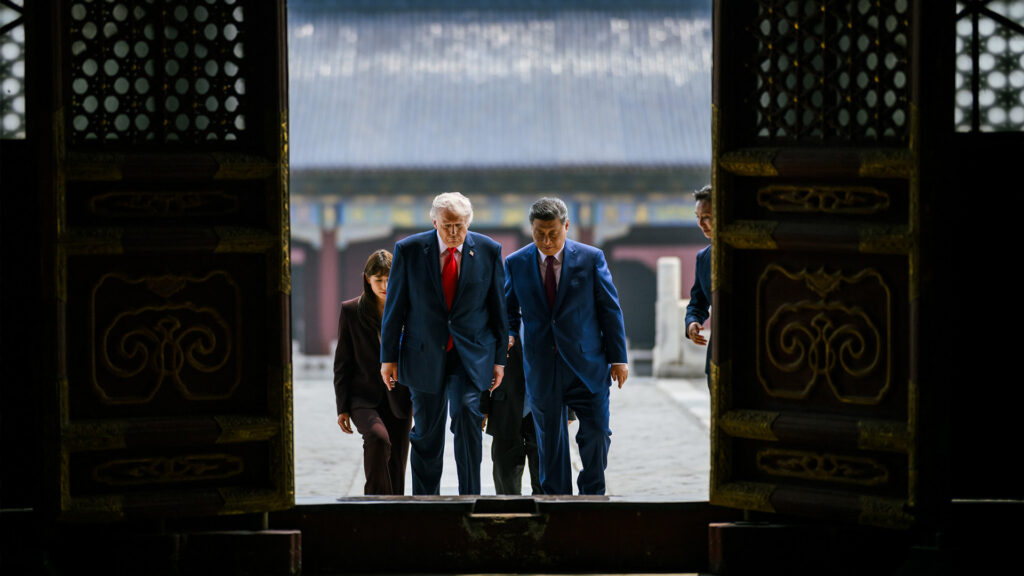
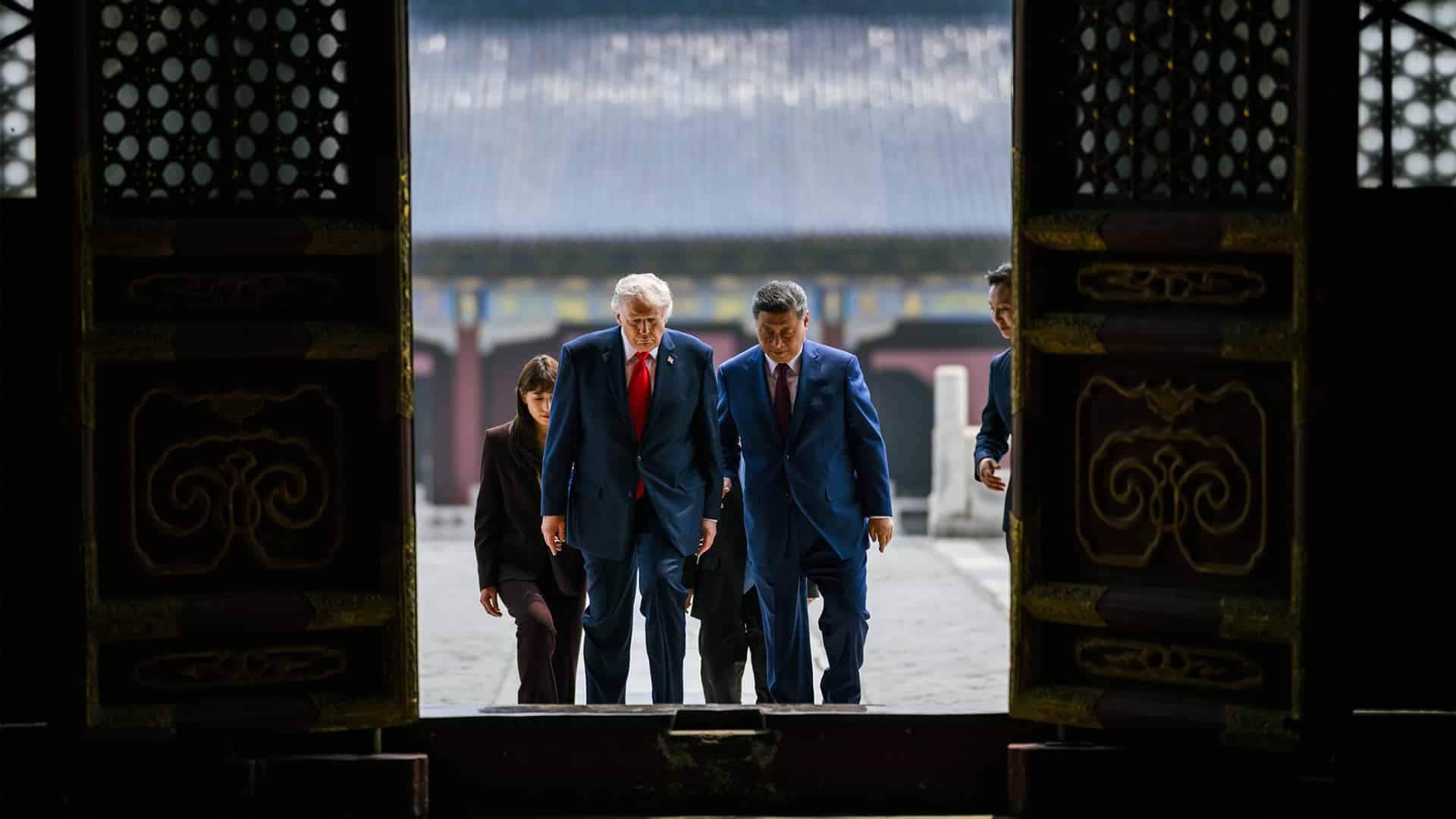
The European analysis of the Trump–Xi summit sketches a new phase in broad strokes: from a logic of engagement to “managed rivalry,” to what the authors call “constructive strategic stability.” In Beijing, according to the article, the official organ People’s Daily stresses that China seeks recognition “on equal terms” and will not retreat on its “core concerns” — above all Taiwan, and also on technology and trade issues. Trump’s visit, initially placed on the back pages, is elevated to major front‑page status, and 2026 is described as “historic and landmark”: the year when the configuration of relations with the United States will solidify in a new format.
This language is all too familiar to the Venezuelan reader. China’s rhetoric on sovereignty and non‑negotiable zones almost mirrors the official discourse of the Bolivarian Revolution: the inviolability of control over oil, the special role of the armed forces, the rejection of “intervention” on human rights grounds. Caracas sees in China’s firmness and simultaneous openness to tactical deals a model of behavior it itself tries to invoke: agreements are possible, but the core of power is not up for discussion.
From the Venezuelan perspective, the key point in the Elcano piece is the characterization of the US–China track as “rivalry under control.” On one hand, this is reassuring: the less likely an open confrontation between Washington and Beijing, the lower the probability of shocks to the oil market and the less incentive for China to fully reorient its agenda toward the US at the expense of peripheral partners like Venezuela. On the other hand, it is worrying: whenever Washington and a major power move into a phase of transactional cooperation, Caracas recalls the US–Cuba “reset” and moments of coordinated Washington–Brussels sanction lines. The fear is simple: to become a small bargaining chip in a big deal.
Analysts in Venezuela, though not directly quoted in the Elcano work, read between the lines. In this text China is not a romanticized “alternative to the US,” but a cold‑blooded actor, capable of demonstrating firmness while readily making pragmatic compromises. A telling example is Senator Marco Rubio, under Chinese sanctions, whom Beijing nevertheless tolerates in the American delegation if it suits the current agenda. Translated into Venezuelan reality: if Beijing can secure some strategic gains from Washington, it will be ready to adjust the depth and form of its support for Caracas.
Equally important is Washington’s perspective highlighted by the Elcano text: the US is ceasing to view China through a logic of “attraction and inclusion” and is openly formalizing long‑term competition while trying to avoid a destructive rupture. This institutionalization of rivalry, even amid Trump’s apparent volatility, means for Venezuela that China will need allies and resources in the global South, but will be more cautious: support for Caracas must not undermine its channels with Washington.
The European dimension of the piece particularly resonates with Latin American sensitivity. The author describes the European Union as being “between relief and strategic anxiety”: on one hand, it is good that the US and China prefer a managed conflict; on the other hand, fear grows of an informal “G2” that will make key decisions “over Europeans’ heads.” In Caracas this is perceived with bitter irony: the “strategic orphanhood” the article attributes to the EU has long been felt by Latin America, and especially Venezuela. The difference is that Europe is still seen as a center of power, while Washington and Beijing decide where the periphery’s maneuvering space will lie.
Economically, the Elcano article emphasizes the continued transactional nature of the US–China agenda: purchases of agricultural products, Boeing deals, energy agreements, investment mechanisms. For Venezuela this contains an unpleasant warning. If the US and China deepen mutual interdependence and create stable channels of investment and trade, Venezuela’s value as a “useful actor” could decline. It will then be easier for Beijing to secure energy security through diversified, less risky supplies, without betting on a country with high political and credit risk. Venezuelan oil, from a symbol of geopolitical insurance, becomes a heavy asset with a bad reputation.
Moreover, US and Chinese efforts to create formal bilateral mechanisms for monitoring and dispute resolution contrast with Venezuelan reality, where agreements with Beijing are often opaque, tied to oil collateral and inherently asymmetric. As the European analysis points out, China is embedding its relations with the US in a regulated, if conflictual, yet predictable framework; with Caracas it works as with a high‑risk partner, imposing harsh conditions that the Miraflores government publicly presents as “brotherly aid.”
In the politico‑diplomatic plane, the idea of “managed competition” between Washington and Beijing means a new kind of gray zone for Venezuela. America will try to contain Chinese influence in the Western Hemisphere, but not at the cost of undermining fundamental stability in its relations with Beijing. This, on one hand, reduces the likelihood of a “crusade” against China in Latin America comparable to the Cold War, and on the other hand limits the range of projects Beijing will be willing to advance in the region: telecom infrastructure, elements of critical logistics or sensitive military programs will inevitably face close scrutiny. For Venezuela, which counts on China as a technological and military counterweight to the US, this is a serious narrowing of space.
Analysts also note that, as the Elcano text describes, Trump arrives in Beijing with “many open fronts” — from Ukraine to Iran and his own electoral agenda. For Caracas this is a direct reminder: the Venezuela file is far from the top of Washington’s priority stack. And when a country becomes one of the secondary files, its fate is even more subject to the logic of “we fear escalation with China, so on peripheral issues we can concede” — or conversely, to using sanctions as a cheap signal of toughness without touching the key US–China balance.
The same logic of distorted priority and double standards appears in the France 24 article on Raúl Castro, “the strongman of Cuba under US pressure” (https://www.france24.com/es/programas/historia/20260526-ra%C3%BAl-castro-el-hombre-fuerte-de-cuba-bajo-presi%C3%B3n-de-ee-uu). It details how Washington is tightening political and judicial pressure on the elderly leader over federal charges in Miami related to the 1996 shootdown of planes by the organization Brothers to the Rescue, and how this again puts his real role in the current Cuban system into question.
Special attention is paid to GAESA — the military‑economic conglomerate that controls key sectors of the island’s economy. For the Venezuelan reader GAESA is almost a copy of Venezuela’s own semi‑state structures, and the figure of the “officially retired” but still decisive leader draws direct parallels with notions of power distribution in Caracas. The question the Cuba article poses — “what is Raúl Castro’s true role in the political, military and economic system?” — in Venezuela sounds like a question about its own reality: how autonomous are civilian institutions from the military elite and associated business groups, and who actually makes key decisions.
For the official discourse in Caracas, this Cuban story serves to confirm a habitual narrative: the United States uses courts, sanctions and individual indictments as instruments to fight “revolutionary” projects in the region. The mere fact that decades after the Brothers to the Rescue incident Miami federal structures revive the Raúl case is presented as an example of the “politicization of justice.” For the opposition, by contrast, details about GAESA and the possibility of personal accountability for human rights abuses and orders given to the military are perceived as a precedent: this could be what future US dealings with individual figures of the Venezuelan nomenklatura look like.
Three levels of influence of the Cuban case on the Venezuelan agenda are evident. Economically and in security terms Cuba remains a key Caracas partner, and any increase in pressure on Havana is immediately interpreted as indirect pressure on the Bolivarian bloc as a whole. At the level of domestic politics the image of the “historical leader” who ostensibly ceded formal powers but continues to be perceived as the system’s center of gravity fuels debates about the founders’ and military core’s influence on current decisions in Venezuela. Finally, symbolically, Raúl’s story — from Cold War episodes and the 1996 incident to current charges — is firmly embedded in the Latin American imaginary: for Bolivarian supporters it is a chronicle of resistance to empire; for critics it is an example of frozen authoritarianism that Venezuela risks repeating.
Both pieces — the Spanish analysis of Trump and Xi and the Franco‑Latin American portrait of Raúl Castro — differ from dry news briefs precisely because they offer an interpretation of the power structure and behavioral logic of the actors. The Real Instituto Elcano does not limit itself to listing summit agreements but places them within a framework of long‑term “managed rivalry,” introduces the idea of an “informal G2” and marks 2026 as a turning point; France 24, in turn, goes beyond reporting new legal steps against Raúl to uncover the role of GAESA and the economic‑military control mechanisms in Cuba.
From Caracas both texts are read as parts of the same puzzle. At the top level — the emerging US–China duo that defines the limits and opportunities for countries like Venezuela, Cuba incluida: how much longer will Beijing be willing to invest in peripheral partners if the main prize is stable, albeit conflictual, relations with Washington? At the mid level — allied regimes with militarized economies and “shadow” leaders whose resilience directly affects the strength of the Bolivarian bloc. And at the basic level — the fate of a particular country that has long overestimated the willingness of external patrons to sacrifice their own strategic interests for Caracas.
In this sense the illusion that one can simply “switch” from the US orbit to the orbit of China or Cuba to escape pressure is shattered by the conclusions drawn from both texts. The key game is played between Washington and Beijing, and the Cuban experience shows the cost of long‑term confrontation with the US under a tightly centralized military economy. Venezuela, remaining a regional actor, is forced to manage its vulnerability within a space defined by these major powers, not outside it. And the clearer Caracas sees this arrangement of pieces — through European and Latin American analytical texts, through stories about summits and aging “strongmen” — the fewer grounds it has for illusions and the greater the incentives to seek its own, not borrowed, survival strategies.