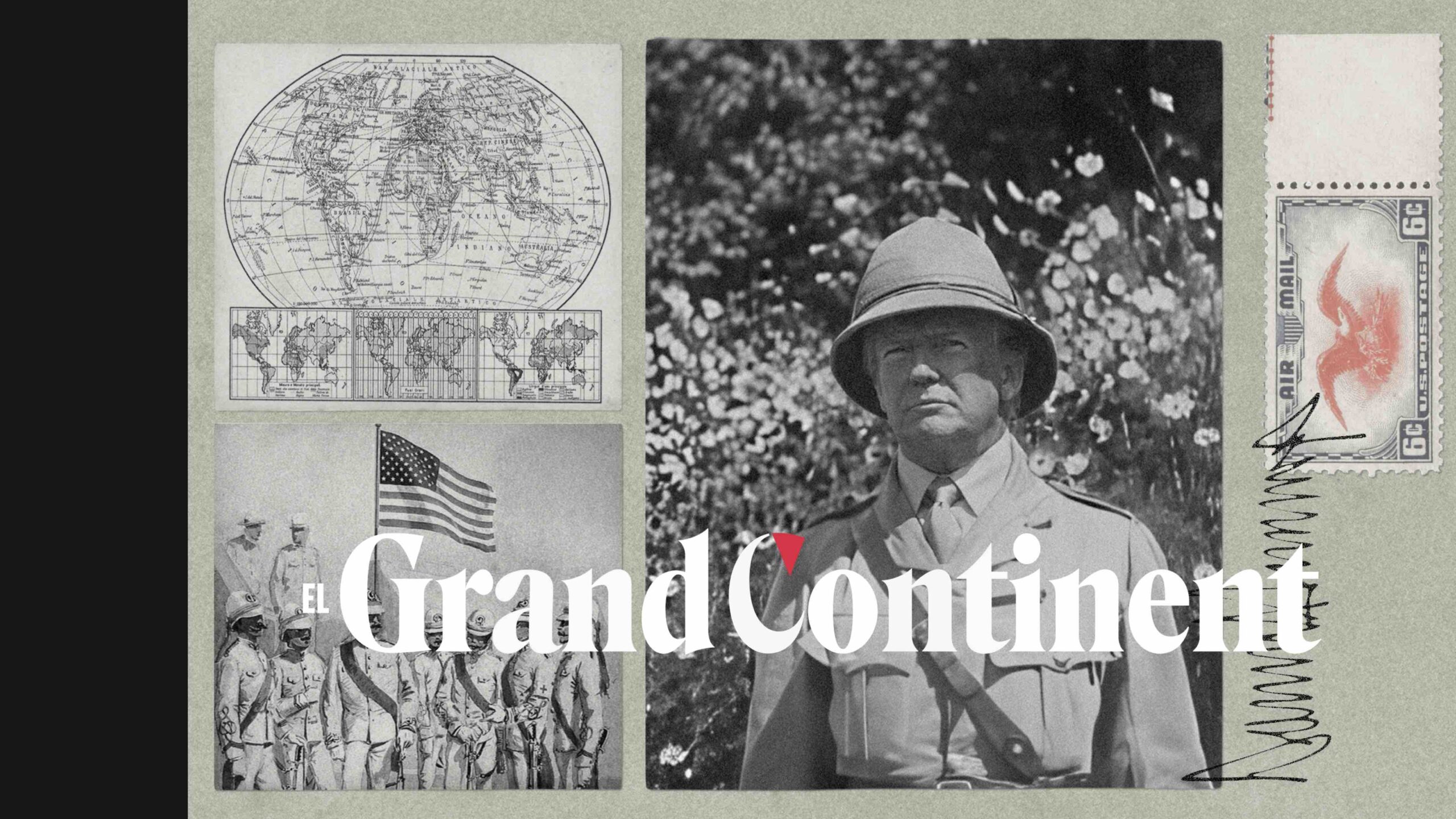
From a Venezuelan point of view, recent headlines form a single narrative about mounting pressure and U.S. one‑sidedness under the Donald Trump administration. Reports and analytical pieces perceive the tightening of migration policy and ICE actions as a departure from professed American values, and the deployment of military forces and data about CIA presence as a continuation of an interventionist past, camouflaged as a fight against threats. Anxiety grows over economic levers—threats of tariffs and economic pressure—direct military actions against Iran and diplomatic pressure on Venezuela; the U.S. withdrawal from the Paris Agreement and the undermining of multilateral institutions reinforce a sense of global disintegration, fueling searches for alternatives—from BRICS to calls for the return of European gold. Overall, the tone of the publications is not a neutral analysis but a reaction oriented toward resistance, distrust, and calls to contain American hegemony. Material prepared based on publications on YouTube, Facebook and Le Grand Continent (Venezuela).
A Venezuelan View of the U.S. Empire, Oil and Propaganda
The combination of three pieces—a Negocios TV video on Iran, Trump and China from Spain (link), a Venezuelan video discussion of Cuba’s oil dependence and propaganda around its energy crisis (link), and a column in the French magazine Le Grand Continent about Trump as a continuation of the United States’ endless colonial war with special emphasis on Venezuela (link)—together provide a very coherent picture of how the world is seen from Caracas: through the prism of the decline of American hegemony, oil geopolitics and the manipulation of history.
Although the sources originally belong to different media environments and countries (Spain, France, the Venezuelan diaspora and opposition circles), they are easily “stitched” into a single narrative characteristic of Venezuelan public debate: the U.S. is not just an external superpower but an empire in crisis, simultaneously dangerous and weakened, whose strength rests on military pressure, control over resources and an internal repressive apparatus. Against this backdrop, China as a counterweight, Cuba as a “mirror of the future,” and Venezuela itself as one of the last testing grounds of Washington’s neo‑colonial policy take on special significance.
The first line of this narrative is built around the Negocios TV storyline about Iran. The YouTube description highlights the growing U.S. military pressure: deployment of the aircraft carrier USS Abraham Lincoln, destroyers with Tomahawk missiles and F‑15E fighters, while the Iranian side theatrically calls the carrier an “achievable target.” For the Venezuelan viewer this immediately evokes memories of Iraq, Afghanistan and Libya, long cited in official discourse as proof of the “aggressive character” of the U.S. Moreover, such scenes overlap with Venezuela’s own experience—the Trump era, when toward Caracas the formula “all options are on the table” was used, exercises were held offshore, and the threat of direct intervention was discussed not as an abstraction.
Particular resonance also comes from the fact that China appears in the same piece. According to the description, Xi Jinping issues a stern warning to Washington, rejecting any intervention against Iran and demanding respect for its sovereignty. In Venezuelan optics this is read almost as a direct extension of Caracas’s arguments: China long ago became a key creditor and investor in the oil, mining and infrastructure sectors, and official propaganda builds it into the image of a “floor” in the emerging multipolar world. Therefore a scene in which Beijing stands up for Tehran’s sovereignty is read as confirmation of the broader line: China defends the principle Venezuela also asserts—rejection of sanctions, blockades and threats of external invasion.
The same material weaves an internal American storyline into the foreign policy line: harsh migration raids in Minnesota, the Trump administration’s legal defeat for violating migrants’ procedural guarantees, the deaths of two civilians—Alex Pretti and Renee Good—during operations, and the summons of the acting head of ICE to court under threat of contempt charges. For a Venezuelan audience this picture has a double meaning. On one hand, for millions of migrants from Venezuela and the region it is a vivid reminder of the risks: even fleeing economic and political crisis leads them into a system perceived as repressive and often racist. On the other— for official rhetoric it is perfect material to accuse Washington of “hypocrisy”: the U.S. lectures Caracas on human rights while allowing civilian deaths and undermining its own rule of law by clashing with federal judges. The figure of Judge Patrick Schiltz, forcing ICE leadership to appear in court, becomes a vivid image of institutional conflict that Venezuelan political speech readily uses as an example that “they too have a democratic crisis.”
This intertwining of external militarism and internal harshness toward migrants fits the old thesis of an “empire in decline”: the weaker U.S. global dominance becomes, the more it relies on force—on aircraft carriers in the Persian Gulf and security forces at its borders. At the same time every escalation around Iran is immediately read in Caracas through an energy lens: conflict in the Strait of Hormuz means volatile oil prices, and Iran, like Venezuela, is an oil exporter under U.S. sanctions. The Spanish piece, emphasizing Iran’s missile tests and rhetoric about “achievable targets,” inadvertently strengthens among Venezuelan readers the sense of a “shared fate” of sanctioned countries, balancing between resistance and the risk of a large‑scale war.
The second layer of the “Venezuelan view” unfolds in the domestic regional field—around Cuba’s electricity crisis, the island’s oil dependence and the Havana regime’s propagandistic techniques. The video featuring economist and oil trading expert Tulio Rodríguez, circulated in Venezuelan opposition circles (recording on Facebook), is presented as an analysis of what a possible halt of Mexican oil shipments would mean for Cuba’s economy. But the textual preface emphasizes something else—exposing a historical falsehood by the leading Cuban program Mesa Redonda anchor Arleen Rodríguez Derivet, labeled “a Castroist talking head” and “journalist” in quotes.
The occasion is her claim that José Martí “did not know electric light” and that, they say, “life in darkness” is natural for Cuban history. The Venezuelan author recalls dates: electricity appeared in Havana in 1889, Martí died in 1895, and he previously lived for a long time in New York—one of the world’s fastest‑electrifying capitals. The conclusion is harsh: “history will not remember Martí, but her—as utterly ignorant about his life and work.” And then a formula familiar to Venezuelan audiences sounds: “it is not Martí who lives in darkness, it is the official discourse that lives in darkness, which extinguishes dates, context and facts to justify the current apagones.”
This phrase works as a transparent metaphor for Venezuela. “Apagones de hoy” refers to both Cuban and Venezuelan blackouts; “extinguishing dates and facts” is a recognizable propagandistic tactic here, when inflation figures, oil production statistics or the scale of the energy collapse are replaced by slogans and heroic portraits. The case of the Cuban anchor is used as a mirror: just as in Havana Martí is instrumentalized to normalize life in the dark, in Caracas Bolívar and Chávez are heroicized to exhort people to “endure” shortages of light, water and fuel.
The figure of Tulio Rodríguez in the headline is also deeply Venezuelan. He is assigned the role of “oil trading expert” who “explains what it means for the Cuban economy if Mexico stops oil shipments to the island.” And although the excerpt does not present his arguments, context makes clear that this concerns the Venezuela–Cuba–Mexico triangle and how the erosion of subsidized deliveries (first from Caracas, then from Mexico City) corner Havana. For the Venezuelan opposition audience this is confirmation of the collapse of “Bolivarian oil solidarity,” where oil was exchanged for doctors, advisors and political backing. Now, with PDVSA weakened and sanctions and production collapse limiting exports, Cuba seeks substitutes, and Mexico’s refusal or reduction of supplies is perceived as another nail in the coffin of the regional project linking Caracas and Havana.
A Venezuelan viewer will see in this not merely a Cuban story but their own present and possible future. Massive power outages in a country with some of the world’s largest oil reserves, mutual accusations of “sabotage,” and constant rewriting of statistics—all this makes the story about “Castroist propaganda” almost a self‑portrait. Where Martí and Havana are discussed, it is easy to mentally substitute Bolívar and Caracas.
The third piece—a Le Grand Continent column “El imperio no se detiene: Trump y la guerra colonial sin fin de Estados Unidos” (full text at the link)—offers a broader theoretical frame for what Venezuelan discourse long calls “imperialism.” The authors, proceeding from a European context, argue that a second Trump term is not a random deviation but a radicalization of a centuries‑old colonial tradition of the U.S. And it is Venezuela that figures as the “latest example” of intervention in a long sequence of “restorations of control” over unruly territories.
The article explicitly states that in the “long history of interventions” Venezuela is merely another episode of “reasserting control,” accompanied by sanctions, threats and pressure on the population. The authors place the attacks on Caracas alongside the 1898 war against Spain over Cuba and Puerto Rico, Theodore Roosevelt’s policies to control the Panama Canal, and President Polk’s stance toward Mexico. By doing so, what Western media often frame as a “democratic crisis in Venezuela” is translated into another plane—the logic of imperial governance of the periphery.
Particularly telling is how the column describes the “kidnapping of dictator Nicolás Maduro”—a formulation that is contradictory in itself. On one hand, the authors do not shy away from criticizing the regime by calling him “dictator,” but on the other they emphasize a colonial technique: seizing a leader, removing him, holding a show trial or elimination as a way to subdue a “province.” A parallel is drawn with practices of empires that centralized power by eliminating rebellious monarchs in colonies. For Venezuelan perception, where plans for U.S. special operations to change the regime have long been part of political folklore, this framing reads like confirmation: the dispute is not about Maduro’s personality but about a superpower’s right to decide a whole country’s fate.
The text then broadens the frame to include Canada and Greenland as objects of a “new form of conquest,” fed by colonial imagination. In a key paragraph it is noted that in both Venezuela’s and Greenland’s cases the Trump administration aimed to “possess and manage mineral and energy resources, turning foreign territory into an economic, strategic and military beachhead.” For a reader in Caracas this is almost a literal description of how local discourse interprets U.S. interest in the Orinoco Belt and the national oil company PDVSA. The comparison with Greenland reinforces the sense that this is not about a “failed democracy” but about a valuable piece of the planet over which great powers struggle.
This line is linked to a renewed reading of the Monroe Doctrine, to which the authors pay special attention. In their version, Trump added his own “corollary” to the old formula “America for Americans,” turning the Western Hemisphere into an almost feudal domain where external players should not enter and internal ones must not resist. In strategic documents such as the National Security Strategy 2025, the authors say, this is formalized as a partial shift away from Europe and Southeast Asia to concentrate on the “backyard.” For Venezuela, sitting on the edge of the Caribbean and the Orinoco basin, this means one thing: pressure will only intensify, and any attempts to lean on China or Russia will be interpreted by Washington not as ordinary foreign relations but as a challenge to its monopoly over the region.
The column makes another move important for Venezuelan perception: it places the U.S. alongside other modern empires—Japan in early 20th‑century Manchuria, Russia in Ukraine, China regarding Taiwan. Such a comparative perspective is familiar in Caracas rhetoric: there has long been talk of a “world of empires” in which Washington, Moscow and Beijing play by similar rules, defending their “zones of interest” and imposing conditions on weaker states. But the fact that European authors explicitly call U.S. actions “colonial” and warn that Greenland may become a “graveyard of international law” is perceived as important external legitimation: what has been said in Venezuela for decades is finally uttered in the West without euphemisms.
Put together, the three described storylines—the Spanish report on Trump, Iran and China, the Venezuelan video on Cuban apagones, and the French column on the “endless empire”—form almost a textbook example of how the “Venezuelan view” of the world is formed. On one level there are concrete facts: aircraft carriers and missiles, migration raids and court rulings in the U.S., power outages in Havana, reductions in oil flows from Venezuela and Mexico, doctrines and Washington’s strategies. On another level there is a dense network of interpretations: the U.S. as aggressor and hypocritical judge, China as defender of sovereignty, Cuba as laboratory and warning, Venezuela as the “last colony” in a chain stretching from the Philippines to Greenland.
For internal Venezuelan debate these materials serve a dual function. They simultaneously feed the official anti‑imperialist narrative (emphasizing military pressure, sanctions, attempts to control resources) and arm the opposition with arguments against the Cuban‑Venezuelan propaganda machine (exposing manipulations of history, substitution of facts by myths about heroes, and the justification of poverty and darkness by appeals to the past). Spanish and French sources add the effect of “external recognition”: criticism of the U.S. and criticism of the Cuban‑Venezuelan propaganda bloc now come not only from Caracas but also from Madrid, Paris, Miami.
As a result, the image of the U.S. in this Venezuelan mirror is quite contradictory: it remains a powerful state capable of sending aircraft carriers to Iran’s shores, threatening regime change in Caracas or redrawing the Arctic map, but at the same time a country with sharp internal contradictions, brutal treatment of migrants, institutional conflicts and, essentially, a colonial mentality inconsistent with its own declarations about human rights and the rule of law. For a society experiencing its own energy and political collapse, this worldview is convenient: it allows blaming external pressure for its own woes while critically viewing the models that for decades were presented as exemplars—both in Havana and in Washington.