
Iraqi Foreign Minister Fuad Hussein, speaking in an interview on Al Jazeera’s Al-Muqabala, discussed agreements with Turkey and progress on restricting weapons. He said the prime minister’s visit to Turkey produced a clear understanding on managing water resources in exchange for energy flows: Turkish companies or the government will manage water projects inside Iraq to combat drought, while oil exports via the Iraq–Turkey pipeline will continue. Shipments through the pipeline have risen from 20,000–30,000 to 260,000 barrels per day. Hussein called the PKK an internal matter for Turkey, backed Ankara’s political initiative and amnesty law for militants, and said he hoped they would disarm, leave Iraqi territory, and reintegrate into Turkish society.
On Syria, the minister said relations between Baghdad and Damascus had become “good and excellent,” based on mutual interests and free of external influence. He denied reports of military buildups along the border, explaining that the measures being taken were intended to maintain control and prevent movements by ISIS militants and drug-trafficking networks. Hussein also disclosed details of cooperation on detainees: Iraq is holding around 168–180 convicted Syrians affiliated with al-Qaeda and ISIS, and has received around 6,000 ISIS fighters transferred from prisons in Hasakah and its surrounding areas. About half of them—3,400–3,500—are Syrians.
The economic cost of the regional conflict has been enormous for Iraq. Disruptions to shipping in the Strait of Hormuz, combined with transport and insurance companies’ reluctance to call at the port of Basra, cost the country around $60 billion in the first four months of the war. Oil exports fell from the usual 3.3–3.4 million barrels per day to zero at certain points. Tankers and the Turkish pipeline partly helped offset the losses; pumping later resumed along a sea route near Oman following agreements with Washington and Tehran.
The shock prompted the government to pursue a strategy to diversify oil export routes and energy sources. Hussein said talks had begun on building pipelines through Jordan and Syria to reduce Iraq’s dependence on its southern export route. Iraq has also made progress in reducing its reliance on imported gas: electricity interconnections with Gulf states via Kuwait are under discussion, along with lines to Jordan and Turkey. The aim is to protect the economy from shipping disruptions and regional pressure.
Domestically, the prime minister is holding intensive talks on the peaceful establishment of state control over weapons. Positive agreements have been reached with four armed factions, including Asaib Ahl al-Haq and Kataib Sayyid al-Shuhada, on integrating their fighters and weapons into official institutions—the armed forces or the Popular Mobilization Forces—and taking part in politics. Talks with Kataib Hezbollah and Harakat al-Nujaba are continuing. Hussein stressed that the constitution prohibits using Iraqi territory to attack neighboring countries. He confirmed that investigations into strikes on Saudi Arabia launched from border areas are ongoing, and categorically denied reports of factions gathering near the border with Kuwait, calling them fake news.
The minister also revealed US pressure: the Treasury Department has formally demanded that border crossings with Iran be closed, leaving only two open—one in Iraqi Kurdistan and one elsewhere in the country. Baghdad is in constant dialogue with Washington to avoid harming the economy: the demand is difficult to meet, and bilateral trade amounts to $15–18 billion a year, including around $4 billion in gas purchases. Hussein also explained why investment in Baghdad is slower than in Kurdistan, citing the dominance of the public sector and central laws inherited from the Revolutionary Command Council that conflict with the liberal constitution. He reaffirmed that efforts to combat corruption, recover funds, and place them in a fund under the Finance Ministry would continue.
In closing, Hussein highlighted Iraq’s key diplomatic role, grounded in balanced relations and its chairmanship of the Organization of Islamic Cooperation. He recalled the achievements of the Baghdad Conference, which brought adversaries to the same table, and the five rounds of dialogue between Riyadh and Tehran held in the Iraqi capital. In his view, Iraq can play a leading role in strengthening regional stability if military operations cease.
News Context
- What are the prisons and camps in Hasakah where ISIS fighters are held, and why is their status disputed among Kurdish forces, Damascus, and Baghdad? — This is a network of detention centers controlled by the Syrian Democratic Forces (SDF) and the Kurdish autonomous administration. The largest include the al-Hol and Roj camps, as well as prisons such as Ghuwayran. They hold suspected ISIS fighters and their family members. Their status is disputed: the SDF seek the repatriation and prosecution of detainees by their countries of origin; Damascus insists on sovereignty over the entire country and does not recognize Kurdish institutions; and Baghdad is seeking the transfer of Iraqi nationals and tighter border controls, fearing the return of militants. The dispute concerns jurisdiction, citizenship, evidence, funding, and security.
- Why is the Iraq–Syria border considered a key route for drug smuggling, particularly captagon, and what tribal or armed networks operate there? — The Iraq–Syria border, especially the areas around Al-Bukamal/Al-Qaim, Rabia/Ya‘rubiyah, and Tanf, has historically been a smuggling corridor. Captagon is an amphetamine-type stimulant. Its production and trafficking have been linked to networks close to the Syrian regime, Lebanese Hezbollah, and Iraqi militias, as well as tribal smuggling networks—for example, those connected to the Shammar and Tayy tribes—local clans, armed groups, and corrupt security forces. The drug travels from Syria to Iraq and onward to the Gulf. Routes shift in response to checkpoints, airstrikes, and struggles for control, but the weak border and the presence of armed actors make it a major smuggling corridor.
- What routes and risks are associated with the proposed pipeline through Syria, and who controls the territory it might cross? — Options under discussion include the Kirkuk–Baniyas route, an Iran–Iraq–Syria corridor to the Mediterranean, and a Qatar–Turkey route through Syria. Risks include fragmented control, attacks by ISIS and militias, mines and sabotage, disputes over transit fees, sanctions, and legal claims. Control varies by area: Damascus or the new authorities hold the central regions; the SDF control the northeast; Turkish-backed groups hold the north; and ISIS remnants and local tribal forces are present in the desert. The project would therefore require agreements among Damascus, the Kurds, Turkey, Iraq, and international actors.
- Who are the Syrian prisoners affiliated with al-Qaeda and ISIS who were transferred to Iraq, and how does Baghdad determine their citizenship and prospects for repatriation? — These are people detained by the SDF or the coalition and transferred to Baghdad to face trial under Iraq’s counterterrorism laws. Baghdad determines citizenship using documents, testimony, intelligence, family ties, and confessions; when papers are unavailable, it relies on biometrics and requests to Damascus and international organizations. Repatriation to Syria is complicated: Damascus does not always recognize the documents and fears the return of militants, the SDF seek guarantees, and international organizations call for fair trials. Many remain in Iraqi prisons, while transfers to Syria are rare and politically sensitive.
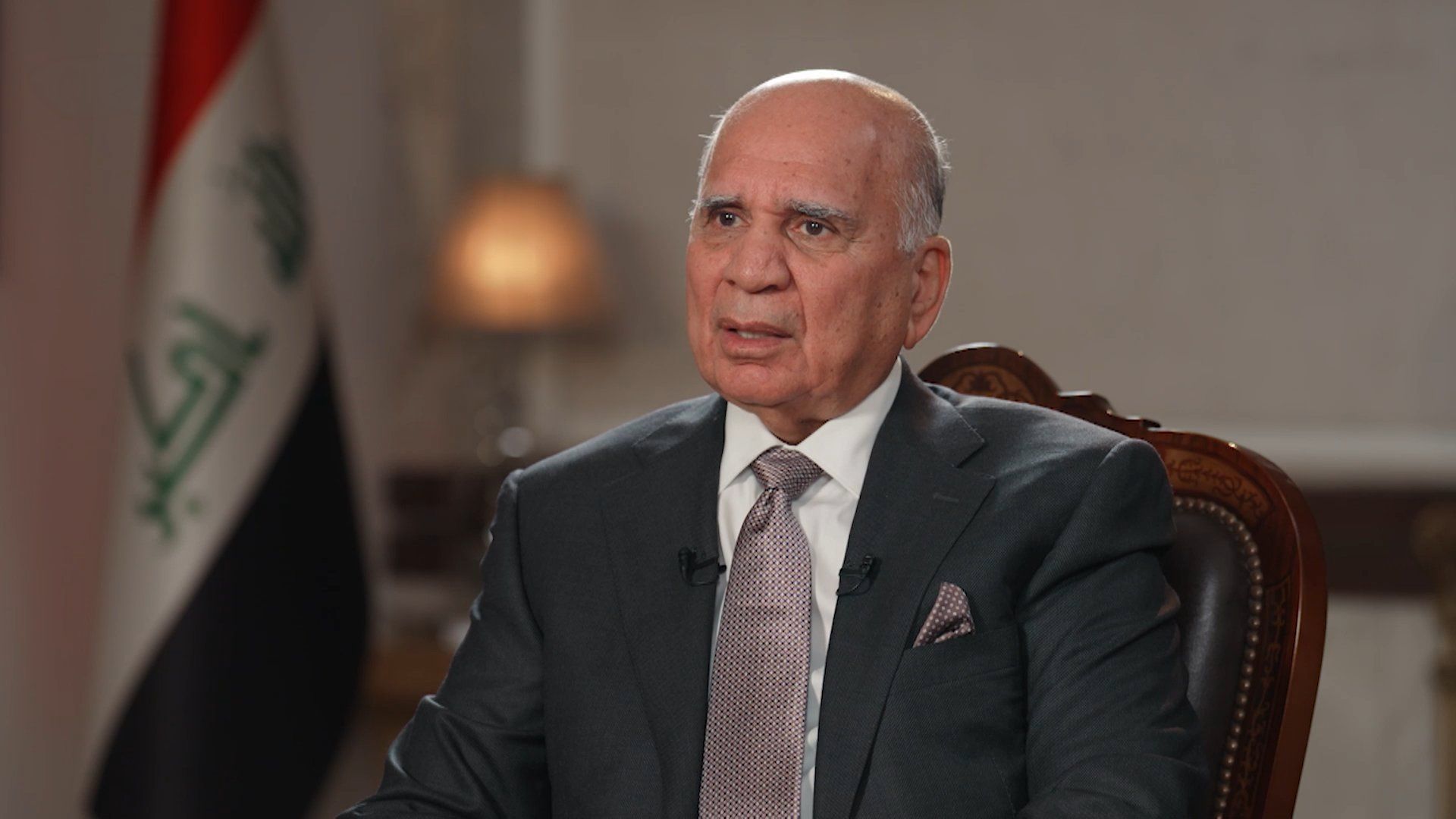
Full version: Iraqi foreign minister to Al Jazeera: Understandings with Turkey and Syria, progress on weapons control