A legal dispute over mail-in voting in the United States, a debate over European identity, and the struggle over António Guterres’s successor at the United Nations may appear at first to be unrelated stories. For Latin American—and especially Venezuelan—audiences, however, they are united by one question: who sets the rules—citizens and institutions, or political forces capable of using administrative procedures and international structures to serve their own interests?
In the United States, the Supreme Court temporarily blocked restrictions on mail-in voting that the Donald Trump administration had sought to introduce ahead of congressional elections. According to El País, the proposed measures called for standardized envelopes with barcodes and the publication of lists of citizens eligible to vote remotely. States that failed to meet the new requirements risked losing postal delivery of ballots.
The court based its decision not only on political and legal objections, but also on practical risks. Too little time remained before the election to safely overhaul a system on which millions of voters depend. A U.S. Postal Service informant described implementation of the order as “risky and rushed” and warned of a possible “catastrophic failure”: errors in barcodes or digital infrastructure could disrupt the distribution of ballots across the country.
Justice Brett Kavanaugh emphasized that local election authorities did not have enough time to implement the new rules reasonably. Democratic state officials and civil rights organizations argued that the president could not impose regulations shortly before an important election that could “effectively eliminate mail-in voting.” Senate Minority Leader Chuck Schumer called Trump’s initiative “blatantly unconstitutional” and “indecent.”
For Venezuelans, this story may sound especially familiar. In a country where voter registration, candidate eligibility, the organization of voting abroad, and the technical details of elections are viewed as elements of political struggle, changing the rules on the eve of a vote rarely appears to be a neutral administrative measure. The U.S. dispute also demonstrates the importance of actual, rather than merely formal, access to elections: mail-in voting is particularly important for people who cannot leave work, live far from polling stations, or face other restrictions.
Trump justified the reform as a measure to combat fraud, although his claims of widespread fraud after the 2020 election were not supported by evidence. For a Venezuelan audience, this rhetoric is not new: allegations of violations can serve as a means of political mobilization and a struggle for legitimacy, rather than being solely the subject of independent technical verification. A significant contrast is the ability of U.S. states, civil society organizations, and courts to challenge a presidential order even during an election campaign.
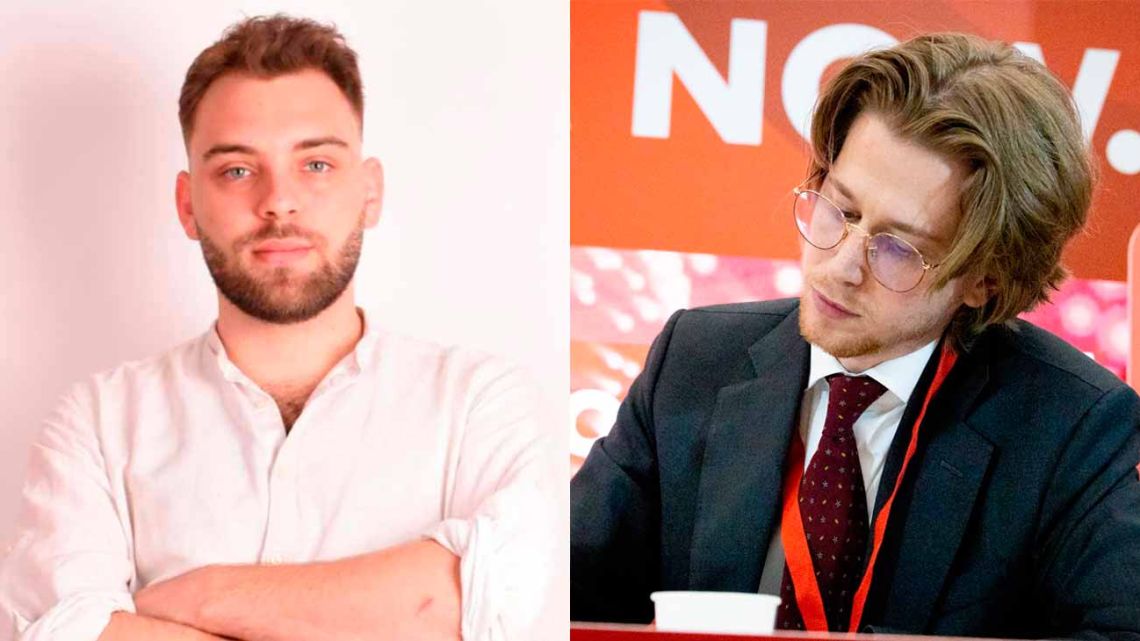
The issue of institutions and political values also emerges in an Argentine interview on Perfil’s Modo Fontevecchia. Spanish sociologists Iago Moreno and Berna León suggest viewing the European Union not as an association based on ancestry, religion, or cultural exceptionalism, but as a project rooted in democratic principles and the memory of war.
According to León, after World War II Europeans faced a common question: how could they prevent a catastrophe of such magnitude from happening again? Moreno notes that European integration should be built on “principles and democratic values” intended to prevent a return to the former “horror.” In this interpretation, Europe is not an ethnic community but a civic space capable of including people of different origins and faiths.
The interview also criticizes the tougher U.S. foreign policy under Trump. Berna León speaks of the need to defend the “multilateral order” in the face of an American policy that he associates with the pursuit of a unipolar, or “mono-polar,” world. For Venezuela, this argument has not only ideological but also practical significance. Caracas has traditionally advocated multipolarity, criticized Washington’s sanctions and interventionist policies, and sought to maintain relations simultaneously with Europe, Latin America, China, Russia, and regional organizations.
Moreno proposes developing progressive and sovereignist ties in Ibero-America, including around the regulation of digital platforms. For Venezuela, where the information space, access to social networks, disinformation, and control over public debate remain subjects of sharp controversy, this issue is particularly relevant. At the same time, the interview is not directly devoted to Venezuela: its Latin American perspective is shaped primarily through Argentina and a comparison of the political trajectories of Argentina and Spain.
Host Jorge Fontevecchia raises a broader question: could a cultural and political bloc emerge comprising Europe, Latin America, and perhaps Canada, independent of both the United States and China? The guests warn against attempts to reduce such unity to Catholicism or a “Latin civilization.” León contrasts ethnic nationalism with a civic project, while Moreno cites Spain, whose history is connected with at least three religions. In his view, the best periods of Spanish history were associated with coexistence, while the most tragic were linked to imposing one identity on others.
This idea is particularly important for societies experiencing deep polarization. For Venezuela, it can be read as a warning against politics of exclusion—whether ethnic, religious, class-based, or ideological. In the interview, nationalism, closed borders, “Fortress Europe,” and far-right forces are presented as threats to the democratic project. Moreno criticizes those who want to “build walls again” and are prepared to tolerate people dying in the Mediterranean.
Argentina is described in this discussion as a “laboratory” of public policy watched closely by Europe’s far right. For Venezuela, this sends a mixed signal: changes in Buenos Aires affect the region’s diplomatic balance and its attitude toward Caracas, while also becoming part of a broader ideological exchange between Latin America and Europe.
If the dispute over mail-in voting shows a struggle over the rules of participation within a state, the debate over the future of the UN shifts the conflict to the global level. The Venezuelan outlet ERM Digital writes that rivalry between the United States and China could complicate the selection of the next secretary-general of the United Nations after António Guterres.
The procedure for electing the UN chief depends not on a simple majority, but on the absence of a veto from the five permanent members of the Security Council—the United States, China, Russia, the United Kingdom, and France. The article notes that Washington may count on London and Paris, while Beijing and Moscow are acting “in tandem.” Under these circumstances, the question of Guterres’s successor becomes a struggle for influence over one of the world’s principal multilateral institutions.
The publication claims that Trump is not interested in strengthening multilateral mechanisms and seeks to prevent China from “crowning” the next secretary-general. According to the outlet, his “sole concern” at the UN is to stop Beijing from determining Guterres’s successor. This view is close to the Venezuelan perception of international politics, in which the United States is often seen as a power that uses global institutions selectively, depending on its own foreign-policy objectives.
Those named among the frontrunners include Argentine Rafael Grossi, who is supported by the White House, as well as Carolyn Rodrigues-Birkett and Rebeca Grynspan, who led in informal Security Council polls. According to the article, China and Russia favor Grynspan because of her international economic agenda and her work heading UNCTAD. For Venezuela, which faces sanctions pressure, oil restrictions, and limited access to financial markets, a potential UN chief focused on trade, development, unilateral sanctions, and economic inequality would be especially significant.
The article recalls that the BRICS countries supported the idea of electing a woman and expanding regional representation. The UN has never had a woman as secretary-general, while Latin America and the Caribbean have held the post only once. For Caracas, this is connected to its longstanding criticism of the dominance of Western powers in global governance. The declaration by Brazil, Russia, India, China, and South Africa demonstrates the Global South’s desire to influence a process traditionally determined by a limited circle of great powers.
A separate dispute concerns Britain’s position on Rafael Grossi’s candidacy. London fears that the Argentine could assist Buenos Aires’s claims to the Falkland Islands. The publication’s author calls these concerns “a lie,” arguing that Grossi would not use the UN in the interests of the country of his origin. For Venezuela, the Falklands issue remains part of Latin American anti-colonial solidarity: Caracas has traditionally supported Argentina’s position and regards British control of the islands as an unresolved colonial problem.
According to ERM Digital, without an agreement between Trump and Xi Jinping, the election could drag on. The article cites as a historical example the nine informal rounds that preceded the election of Kofi Annan in 1996. For Venezuela, such uncertainty matters not only symbolically. An independent secretary-general focused on development and dialogue could become an important figure for states facing sanctions and international isolation. By contrast, a candidate perceived as close to Washington would inevitably provoke suspicion in Caracas.
All three stories point to the same problem: democratic procedures and international institutions do not exist in a vacuum. Electoral envelopes, technical standards, rules governing access to voting, European identity, the veto power of the Security Council, and the selection of the UN chief may appear to be separate administrative issues. In practice, however, it is through these mechanisms that it is determined who has the right to participate in decision-making, who is excluded, and whether an institution can preserve its independence under pressure from powerful political actors.