Venezuelan and Spanish‑language media, citing European sources, interpret the joint US–Israeli operation against Iran as a sharp escalation driven by an aggressive and at the same time tactically changeable policy of the Trump administration. Reports and analysis describe the action not only as a military strike but also as a legal and political challenge: the legitimacy of the attacks is questioned, constitutional and international claims against Washington are exposed, remaining allies of Tehran and the consequences for Palestine and the whole region are discussed. Special attention is paid to the distancing of European capitals — for example, Spain's refusal to provide bases — and to Trump's attempts to simultaneously demonstrate force and open a new diplomatic agenda with Iran's leadership. Overall, the narrative comes together as a critique of unilateral use of force, showing growing resistance from other states and social groups. The material was prepared based on publications from www.instagram.com, www.bbc.com and www.youtube.com (Venezuela).
Venezuela, Iran and the "axis of resistance": how the Middle East is reflected in Caracas
Venezuelan reaction to the new round of confrontation between the US and Israel with Iran consists of many voices and storylines. In local media and social networks the military strike is perceived not as a distant event in the Persian Gulf but as an episode of a larger history in which Caracas sees itself as part of a global "axis of resistance" and simultaneously as a hostage of oil and sanctions geopolitics. This picture weaves together Instagram comments from Bolivarian activists, analysis from international media, and academic views of Latin American experts.
One of the most revealing pieces is a short Instagram reel in which the author, from a typically Bolivarian, left‑antiimperialist perspective, dissects the US–Israel strike on Iran and the broader "Trump strategy" toward Tehran (video). In this reading Washington's course toward the Islamic Republic is automatically overlaid on Venezuela's own experience: sanctions, regime‑change attempts, economic strangulation, and the search for rescue through "alternative" alliances — above all with Iran.
Trump's course is described as "política desastrosa… totalmente aventurera" — a catastrophic, purely adventurous line that assumes reliance on the internal collapse of the Iranian state. The author claims the strike produced the opposite effect to what was intended: "…genera un efecto Alberso al que quería, matar niños de una escuela unifica a pueblo contra el ataque y debilita su política de destruir al régimen desde adentro…" — killing children in a school (an image of extreme violence against civilians) unites the people around the attacked regime and thereby undermines the strategy of "destroying the regime from within." For a Venezuelan audience the parallel is obvious: this is how Caracas explains why US sanctions did not overthrow the government but became a factor consolidating the core of supporters and strengthening anti‑imperialist rhetoric.
In the same vein the author addresses political consequences for the leaders behind the strikes: "…esto puede es el telegrama de defunción de Trump y Netanyahu ya que va a tener más costos que beneficios…". The strike on Iran is presented as a "death telegram" for Donald Trump and Benjamin Netanyahu — a move that will bring them more costs than benefits. For the Venezuelan Bolivarian discourse this is a familiar note: Washington's and Israel's foreign policy force actions are read as a suicidal imperialist impulse that ultimately accelerates the downfall of the aggressors themselves — much like how Hugo Chávez and Nicolás Maduro once portrayed US presidents as doomed to fail because of their global hegemony.
The most "Venezuelan" part of this analysis concerns oil geopolitics and the Strait of Hormuz. The author predicts that a possible blockade of Hormuz "…va a llevar a elevar exponencialmente el precio del petróleo y el gas generando inestabilidad e inflación en todo el mundo…". For a classic oil exporter like Venezuela, rising commodity prices have traditionally been seen as an opportunity to strengthen the budget and geopolitical influence. However, a caveat now appears in the speech: global "inestabilidad e inflación en todo el mundo" also hits Venezuela's import‑dependent economy, deformed by sanctions. In the subtext a double calculation is visible: the crisis around Iran could raise Caracas's oil revenues, but at the cost of such global turbulence that the country's recovery would become even harder.
The Instagram monologue concludes with a classic Bolivarian formula: "Fuera el imperialismo yankee y sionista de todo medio oriente." The coupling of "imperialismo yankee" and "sionist" Israel as a single block of aggression has long been embedded in pro‑government media discourse in Caracas. Since the late 2000s official Venezuela has consistently shown solidarity with Palestine, Syria, and Iran, fitting itself into the global "axis of resistance." Therefore the strike on Iran in this narrative is not simply a regional episode but another proof of the correctness of the Bolivarian project and Venezuela's "historical mission."
A similar storyline, but in a different register, is developed in BBC Mundo's analysis "Qué aliados le quedan a Irán en la región en medio de su enfrentamiento con EE.UU. e Israel". The article is not written from Caracas, but it directly touches Venezuelan history: Iran is presented as a weakened center of the "anti‑American" axis, whose old alliances are either bloodless or have lost significance. Among those allies is Venezuela, with a reminder of a "alianza estratégica" and more than 180 bilateral agreements worth over $17 billion. However, the key phrase for the Venezuelan reader is: "la mayoría de los cuales o se quedaron en el papel o fueron abandonados." The projects loudly promoted in Caracas — from industrial cooperation to joint refining capacities — are presented largely as symbolic, not realized in full economic results.
The article pays particular attention to the fact that for Iran the benefits of relations with Caracas have always been "más bien simbólicos." It also emphasizes that after the capture of Nicolás Maduro by the US "el pasado 3 de enero" and his imprisonment in an American jail (in the BBC analysis he appears as an already deposed ex‑president), these ties effectively found themselves in limbo. For a Venezuelan audience this reads as a painful revision of two decades of rhetoric about a "strategic partnership": if for Tehran it yielded only limited symbolic effect, for Caracas the bet on that alliance becomes an additional foreign policy burden.
BBC places Maduro in the same row with Bashar Assad and Vladimir Putin — not as equals in scale but as political allies of Iran with a pronounced anti‑Western course. But it draws a distinction: Russia and China, while important to Iran, do not form an unconditionally loyal shield. According to the article, in 2025 China bought about 80% of Iranian oil, but did not invest in large‑scale modernization of Iran's economy; Russia is occupied with its own confrontation with the West and is unlikely to lend a shoulder in Iran's Middle Eastern adventures. In this configuration Venezuela looks like one of many peripheral "symbolic" partners, worsening its international standing without tangible economic gains.
For internal Venezuelan discourse such a turn is unpleasant but telling. It supports those who long argued that building an "axis" with Iran, Syria, and several other states was an expensive ideological bet with minimal return. The official narrative of "diverse alliances" and "circumventing imperialism" is under pressure from external assessment: there are many agreements, few results, and the key ally (Iran) is itself drawn into confrontation, less and less in control of its own perimeter.
Another analytical layer comes from Latin American commentary. In the program Hoy Es Noticia, featuring Chilean political scientist Isaac Caro, director of the Department of Politics and Government at Alberto Hurtado University, the joint US–Israeli strike on Iran is discussed in the context of Operation "Furia Épica." The video is available on YouTube and is actively quoted in Venezuelan media space. Caro explains a more "defensive" posture of Washington toward Tehran by a number of factors, among which he mentions the "éxito militar de Donald Trump en Venezuela" — a formulation that has become a subject of sharp debate in Caracas.
For the official Venezuelan discourse, speaking of any "success" of Trump in the country is absurd: according to the authorities, the US sanctions and political campaign failed, and Washington was forced to move from an "all options on the table" strategy to more pragmatic bargaining and partial easing of restrictions. However, in a more neutral or opposition reading Trump had at least partial success: blocking external financing for the government, severely constraining PDVSA's maneuvering, international delegitimization of the Bolivarian regime, and creating long‑term risks for its stability. That a foreign expert incorporates this "success" into the general logic of American policy allows Venezuela to lift the local propaganda veil and see the events as part of a broader trend: from Syria and Iraq to Caracas and Tehran.
Caro also emphasizes that the newly appointed commander of the Islamic Revolutionary Guard Corps, Ahmad Vahidi, could strengthen Iran's presence in Latin America. For the region this is primarily linked to the memory of the AMIA attack in Buenos Aires, the shadow of Hezbollah on the Triple Border, and in general to the network that many Western and regional intelligence services attribute to Tehran. For Venezuela, which has long cooperated with Iran on energy and, according to several investigations, on military and intelligence lines, this signal is read ambivalently. On one hand, it confirms the strategic depth of anti‑sanctions schemes — from fuel and spare parts supplies to joint routes for evading embargoes. On the other, it heightens fears that the country will finally be fixed in the image of a "bridgehead" for structures considered terrorist by the US and Europe, with corresponding consequences for its already difficult international status.
Putting all these voices together reveals a complex, contradictory picture. Inside Venezuela the strike on Iran is used to reinforce the usual binary storyline "empire versus peoples": emotionally charged language like "política desastrosa," "totalmente aventurera," "telegrama de defunción" and slogans such as "Fuera el imperialismo yankee y sionista de todo Medio Oriente" substitute for a detailed analysis of the interests of the US, Israel, Iran, and neighboring states. At the same time the factual side of events (the scale of the operation, its immediate goals, Iran's internal dynamics) is almost not articulated — the interpretation that confirms an already existing worldview comes to the fore.
External analytical sources — such as BBC Mundo's report on Iran's allies in the region or Isaac Caro's comments — add a different, more sober layer. They show that:
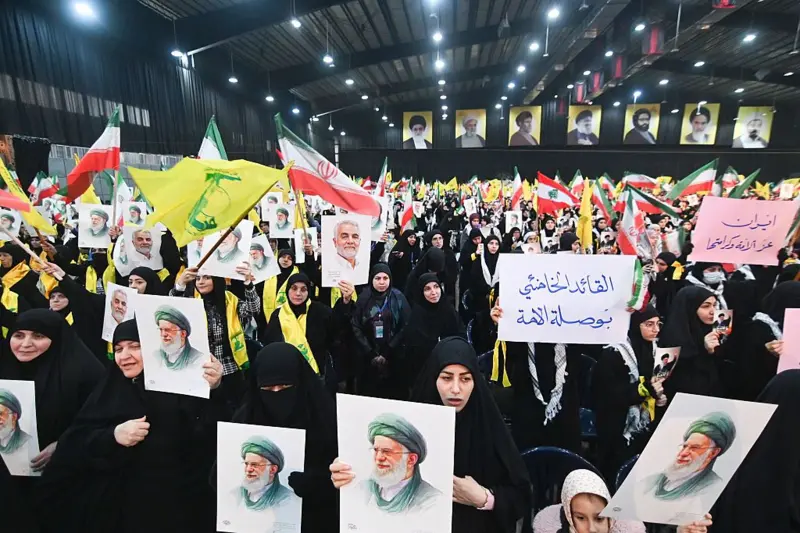
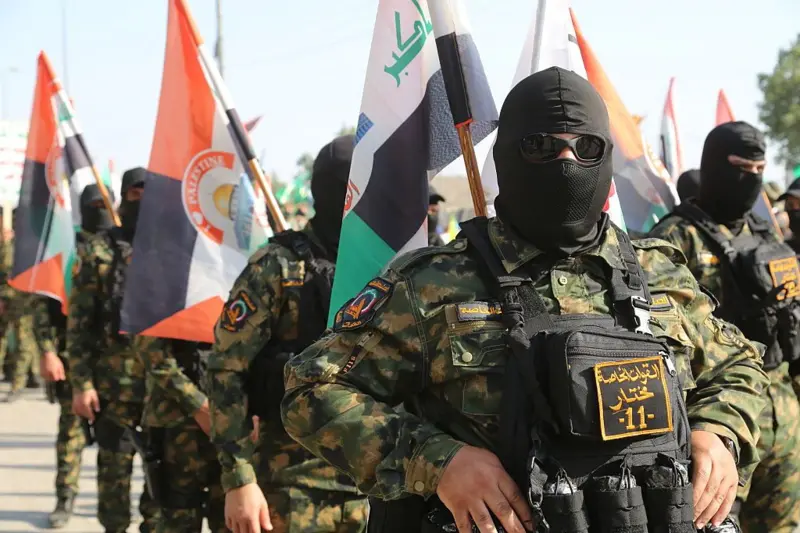
Iran's "axis of resistance" has weakened: Assad has less control of his country, Hezbollah and other proxies have taken losses, and support from Russia and China is limited by pragmatic considerations. In this deconstruction Venezuela does not look like a key player, rather an episode in a long list of partners that brought Iran more symbolic than practical effect.
The economic basis of the "alternative globalization" Caracas bet on proved weaker than the ideological superstructure. Numerous Iran–Venezuela agreements, which inside the country were presented as the basis for a technological leap and diversification, are described from the outside as "se quedaron en el papel." Against this backdrop, what was once touted as a victory of sovereign foreign policy now looks like an expensive experiment with minimal returns.
The logic of American policy toward "inconvenient regimes" — from Venezuela to Iran — can change tactically but retains its strategic core: pressure, sanctions, support for opposition, and a bet on internal exhaustion. Hence the importance of how the Venezuelan elite reads such storylines. Some perceive them as a signal to further rapprochement with Tehran and to seek protection within the weakening "axis of resistance." Others see a warning that continuing the previous course will leave the country both more dependent on unstable partners and more vulnerable to multilayered pressure from the West.
In any case, the new flare‑up of conflict around Iran has once again brought Venezuela to the surface of international discussion. In some texts, as in the Bolivarian Instagram analysis, Caracas speaks about Tehran as if looking into a mirror of its own fate. In others, as in the BBC Mundo piece, it appears as a byproduct of an unsuccessful Iranian geopolitical project. And in expert comments like Isaac Caro's interview, Venezuela emerges as one of the testing grounds where Washington's hard line was tried — a line whose consequences are felt in Caracas, in Tehran, and on the oil markets to which both are painfully tied.