Amid Bad Bunny’s high‑profile halftime performance at the Super Bowl, Spanish‑language outlets from Venezuela are reinterpreting the latest American political battles through a cultural lens: from immigration and Puerto Rico’s status to a symbolic challenge to Trump’s theatrics. Commentary and analysis see the show not merely as a concert but as a direct rebuttal to the rhetoric of U.S. administrations, a demonstration of the weaknesses of Trumpism, and a way to mobilize Latin American identity against conservative narratives. These cultural disputes intertwine with broader themes — trade issues like USMCA (T‑MEC), the influence of a weak dollar and unemployment on remittances, scandals such as the Epstein case, and a sense of U.S. hostility toward Venezuela — showing how entertainment events become a forum for geopolitical and domestic critique. Material based on publications from elpais.com (Venezuela), elviejotopo.com (Venezuela), izquierdasocialista.org.ar (Venezuela).
Venezuela, dictatorships and the U.S.: how Latin America’s past speaks to the present
The assassination of Orlando Letelier, the former Chilean foreign minister in Salvador Allende’s government, blown up in Washington in 1976, has never been for a Venezuelan perspective just an episode of Chilean history. The piece on elpais.com recounting a former Chilean military officer sought in his homeland for crimes of the dictatorship era and convicted in the U.S. in 1987 for his role in that murder only refreshes a whole layer of memory and associations in Venezuela. Especially when it is emphasized that the American court handed him a comparatively lenient sentence ("pena baja por su confesión"), turning one of the most notorious political murders of the Operation Condor years into a story about a "repentant perpetrator."
From the Caracas viewpoint this appears as a classic example of double standards: the U.S. is willing to punish an individual agent but is not prepared to examine its own role in supporting regimes that produced such crimes. The fact that the crime took place in Washington and the sentence was issued by an American court simultaneously highlights the power and limits of North American jurisdiction: yes, an individual officer ends up in prison, but the system that made such operations possible remains off the dock.
For the Venezuelan reader this sounds especially familiar against the backdrop of their own history of impunity for security forces. Human rights organizations like Provea and Cofavic have for years documented extrajudicial killings, torture, arbitrary detentions that either never reach a court or end with symbolic sentences. When elpais.com’s piece surfaces the story of a Chilean military officer who, for arranging a political assassination in the U.S. capital, ultimately receives leniency for pleading guilty, it is read as confirmation of a general pattern: security structures in Latin America, especially those that acted in line with “the right” geopolitics, rarely face full accountability.
It is no coincidence that this text is placed in the migration and U.S. section, where on the other side of reality thousands of Latin Americans, including Venezuelans, pass through a harsh immigration and criminal system without the slightest chance of similar leniency. The contrast between how punitive the American judiciary is toward undocumented migrants and how lenient it has been in the past with agents of military dictatorships is perceived in Caracas as evidence of the politicization of justice: an ordinary person receives the maximum punishment, while a professional repressive apparatus receives the minimum if it was once part of the "anti‑communist" front.
Venezuelan memory inevitably draws parallels with its own traumas. Mass violence during the suppression of insurgents in the 1960s, the shootings and repression of the Caracazo in 1989, killings and torture during the protests of 2014 and 2017 — these are not closed chapters but open wounds. The question raised when reading the Letelier story is simple: if even in such a paradigmatic Cold War case punishment was partial and mild, who and when will be held accountable for Venezuelan disappearances, torture, extrajudicial killings, for violence both before chavismo and under it?
Another sensitive issue is extraterritorial justice. The fact that the Letelier case was tried in the U.S., not Chile, resonates with current attempts to hold Venezuelan officials accountable through universal jurisdiction and international mechanisms, including the International Criminal Court’s investigation into Venezuela. The question asked in Caracas is: why does Latin America so often require a court outside the region to at least partially move a case forward? Letelier, killed in exile, and the former Chilean officer convicted overseas become a precedent invoked to justify the sense and necessity of international intervention in Venezuelan affairs.
Against this background, particular interest arises in how Latin America itself, and within it Venezuela, responds to the American claim to be the world’s arbiter. The piece "La amenaza de Venezuela" on elviejotopo.com, written from a Bolivarian perspective, unpacks Obama’s well‑known formulation of Venezuela as an "unusual and extraordinary threat" and shows that Caracas’s real danger to Washington is by no means missiles and tanks, but the example of a social project that survived under sanctions and openly challenges U.S. economic and political hegemony.
In this text the U.S. appears not as a neutral judge in cases like Letelier’s, but as a systemic aggressor: initiator of sanctions, asset freezes, attempts at regime change, up to scenarios describing the bombing of Caracas and the "abduction" of the president and first lady. Quotes from Trump cited in "La amenaza de Venezuela" read in the Venezuelan interpretation as an outright admission of imperialist interest in resources: when he says the U.S. will not allow a "hostile regime" to seize "our oil, our land or any assets" and that they must be "immediately returned to the United States," in Caracas this is read as nothing other than an attempt to rewrite property rights over another country.
Sanctions, described in the same text as "one of the harshest regimes in the world," which led to the economy’s near‑collapse by almost 99% in a year and accompanied by "brazen theft" such as the seizure of 32 tons of Venezuelan gold at the Bank of England, complete the picture. In the Venezuelan narrative they play the same background role as in the Letelier case: behind selective justice and loud statements about human rights lies cold calculation — control over oil, gold, geopolitical influence.
Against this background the Bolivarian government constructs a counterimage: a country, besieged though it may be, that is socially oriented, having built a network of missions in education, healthcare and housing, and launched mechanisms of direct and communal democracy. "La amenaza de Venezuela" lists in detail Chávez and Maduro’s missions — eradicating illiteracy, mass housing programs, Barrio Adentro and Operación Milagro in healthcare, scholarships, training tens of thousands of specialists. This is not presented as mere statistics: it is posed as a contradiction to the official American discourse that presents Venezuela as an example of "socialism’s failure." The Venezuelan response sounds different: if here, even under sanctions, the proportion of homeless is lower than in the U.S., and millions vote on budget allocations for local projects, then who exactly has the standing to speak about "democracy" and the "collapse of the model"?
Municipal assemblies, communal councils, workers’ congresses described in "La amenaza de Venezuela" are presented as practical schools of self‑government. Workers submit proposals, the president publicly responds "aprobada" or sends ideas back for revision, neighborhood residents vote on priorities — from installing water filters to opening clinics. In the official and pro‑government rhetoric to which this text clearly leans, these are not adornments but proof that 21st‑century socialism is not Soviet bureaucracy but "democracy from below." That is why the American designation of Venezuela as a "threat" is reinterpreted: the danger is not the level of armaments but the possibility that "los don nadie," the "nobodies" around the world, will see in Caracas a working example.
From inside Venezuela this discourse serves both as a response to accusations of authoritarianism and as an effort to restore dignity to people who have lived for years with inflation, shortages and migration. The Letelier story, the mild sentence of his killer, and the broader context of Operation Condor become in this optics an important argument: just as the U.S. coexisted for decades with Pinochet’s Chilean dictatorship, so current sanctions and lectures on human rights toward Caracas are viewed not as a call for democracy but as a continuation of the same policy of control and punishment of disobedient regimes.
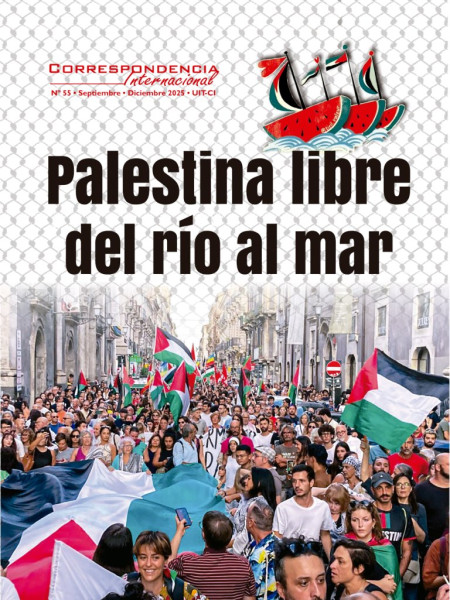
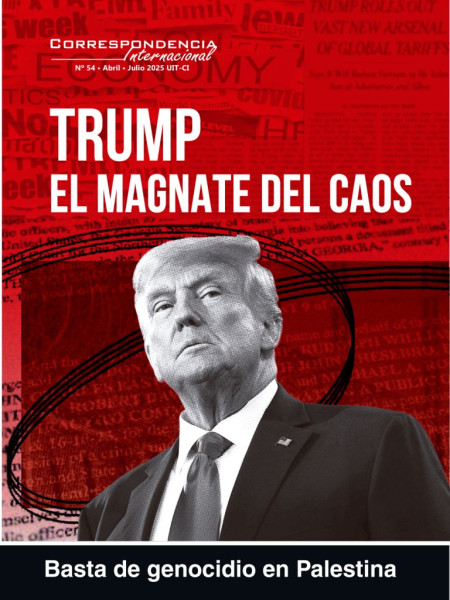
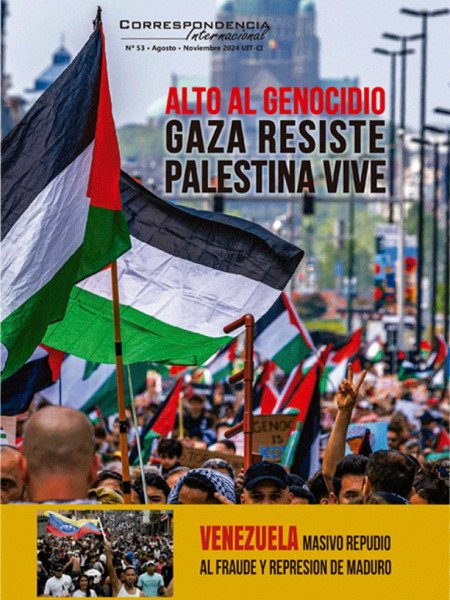
On the other flank of the Latin American left, but in the same logic of confronting U.S. hegemony, is a short piece about a party newspaper on izquierdasocialista.org.ar. Describing the weekly as "reflejo de las luchas del movimiento obrero, las mujeres y la juventud" and emphasizing that it exists only thanks to "nuestros propios aportes y del de los suscriptos," the authors place it in the tradition of self‑funded, class‑based media. For a Venezuelan audience accustomed to debates about media wars, corporate and state monopolies over information, this easily translates to their own reality: in a world where the agenda is set by American news giants and the entertainment industry — from Donald Trump to Super Bowl shows — the left sees an answer in creating "their" press, serving neither advertisers nor the state but workers, women and youth.
In Venezuela this logic is strengthened by an anti‑imperialist context: while the U.S. projects its cultural hegemony worldwide, from political talk shows to pop culture, leftist and Bolivarian outlets describe their mission as resistance to that flow. The same type of thinking that allows Caracas to read the Letelier case, sanctions against Venezuela, or performances by Latin American stars on an American stage differently, appears in the Argentine description of the party newspaper: media are not neutral, they are a field of class and geopolitical struggle, so a "pure" publication must rely on contributions from its readers rather than money from corporations or embassies.
Thus, if one connects all these threads — Letelier’s murder and the lenient sentence of his perpetrator, sanctions and attempts at economic strangulation of Venezuela, the Bolivarian revolution’s anti‑imperialist self‑narrative, and the experience of self‑funded left media described on izquierdasocialista.org.ar and in "La amenaza de Venezuela" — a single picture emerges. From the Venezuelan viewpoint the U.S. appears simultaneously as judge and accomplice: by punishing individual agents of old dictatorships, it preserves untouched the system that birthed and nourished those dictatorships. In response, Latin America, and above all Venezuela, attempts to construct counter‑narratives — through communal democracy, by reinterpreting the "threat" label, through independent left publications. And then the story of one sentence in Washington ceases to be an episode of the past and becomes a reminder that the struggle for memory, justice and the right to tell one’s own story is far from over.