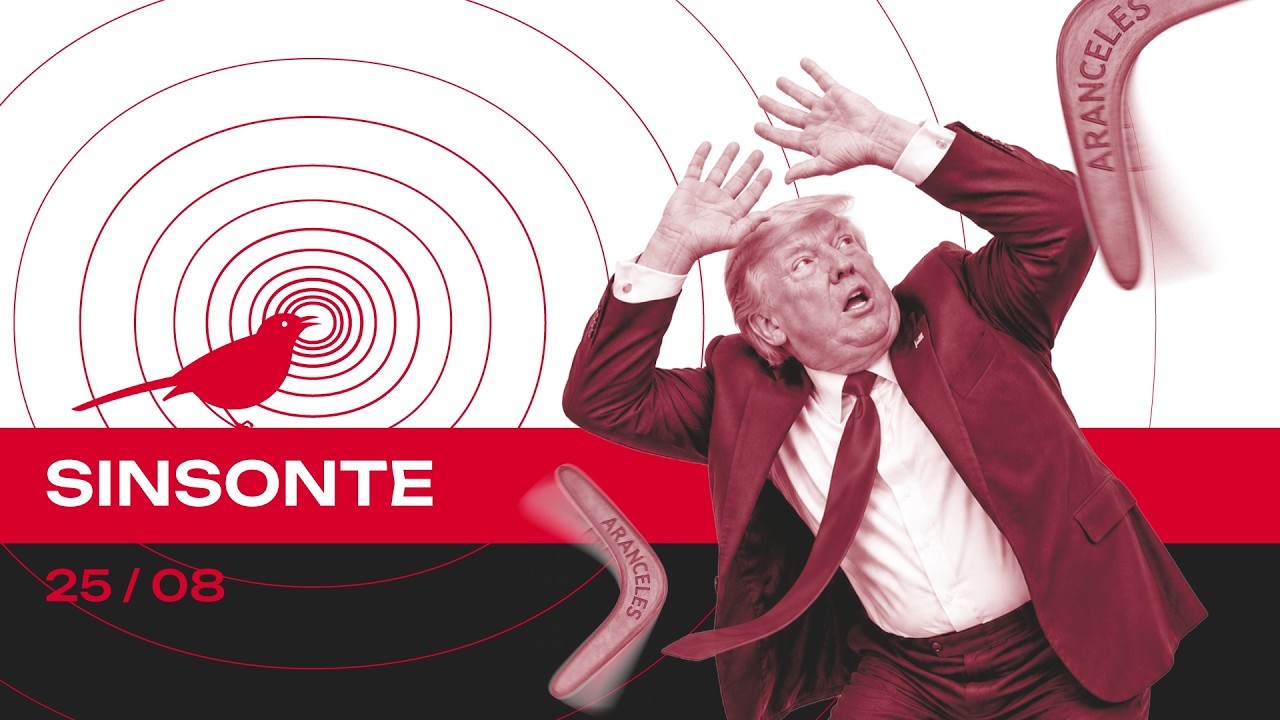
Canada’s rejection of U.S. President Donald Trump’s threat to rename Lake Ontario, which the two countries share, “Lake America” has become more than a curious diplomatic episode in Venezuela’s media space. In an Agencia EFE report, the gesture is viewed as another escalation in the trade and political confrontation between Washington and Ottawa—one that now affects not only tariffs and markets, but also the identity, history, and symbols of their shared geographic space.
For Venezuelan audiences, the story carries special significance. For many years, Venezuela has faced U.S. sanctions, restrictions on oil operations and financial transactions, and barriers to international trade. Washington’s actions toward Canada are therefore perceived as an example of unilateral pressure that can be applied not only against countries considered opponents of the United States, but also against its closest partners and allies.
In this interpretation, Canada’s refusal becomes a symbol of the defense of national dignity and sovereignty. The issue is not merely the lake’s name: the very possibility of imposing a new name on a shared natural feature is seen as evidence of the United States’ desire to determine the terms for its neighbors. The Venezuelan perspective emphasizes that trade disagreements can grow into political conflicts affecting states’ right to manage their own symbols and public space.
The topic was further developed in an episode of Canal Red Latinoamérica, “Canada Challenges the U.S. / Trump Launches an ‘Economic Pariah’ Operation Against Iran”. Within the stated editorial framework, Canada’s conflict with the United States is compared with American pressure on Iran. The expression “economic pariah” reflects a critical view of the use of sanctions and economic isolation as foreign-policy instruments.
For Caracas, the pressure on Tehran is especially familiar. Venezuela’s experience with sanctions makes the idea that financial and energy restrictions can serve not only to regulate trade but also as a mechanism of political coercion particularly resonant. From this perspective, U.S. policy toward Iran does not appear to be an isolated case; rather, it forms part of a broader model in which Washington seeks to isolate governments that do not agree with its course.
Canada occupies a special place in this picture. Being deeply integrated into the U.S. economy and a traditional American ally, it demonstrates how vulnerable even Washington’s closest partners can be to trade and political pressure. For Venezuelan audiences, this supports the argument that U.S. sanctions and tariff policies are extraterritorial and global in nature.
The Canal Red Latinoamérica episode also includes a review of Mexican President Claudia Sheinbaum’s press conference. The Mexican theme links Canada, the United States, Iran, and Latin America within a common context of seeking an independent policy in the face of economic and diplomatic pressure. For the countries of the region, this means preserving room for sovereign decision-making rather than reducing relations with the United States solely to dependence on the North American market.
The Venezuelan interpretation of Canada’s response boils down to the idea that resistance to unilateral measures is possible even amid close economic interdependence. For Caracas, this supports a policy of diversifying markets, developing ties with non-Western partners, and coordinating regionally against sanctions. In this reading, the Canadian case and the pressure on Iran become part of a broader dispute over the limits of economic power, national sovereignty, and states’ right to reject conditions imposed from outside.