The job of Director of National Intelligence was designed to be, above everything else, boring in a specific way. After the catastrophic intelligence failures of September 11, 2001, Congress created the position in 2004 to give the country a single senior official who would coordinate seventeen federal intelligence agencies, synthesize their findings, and deliver unvarnished analysis to the President of the United States — regardless of what that president wanted to hear. Previous holders of the office were people whose entire careers had been built inside the architecture of national security: four-star generals, career intelligence officers, diplomats, senators with decades on oversight committees.
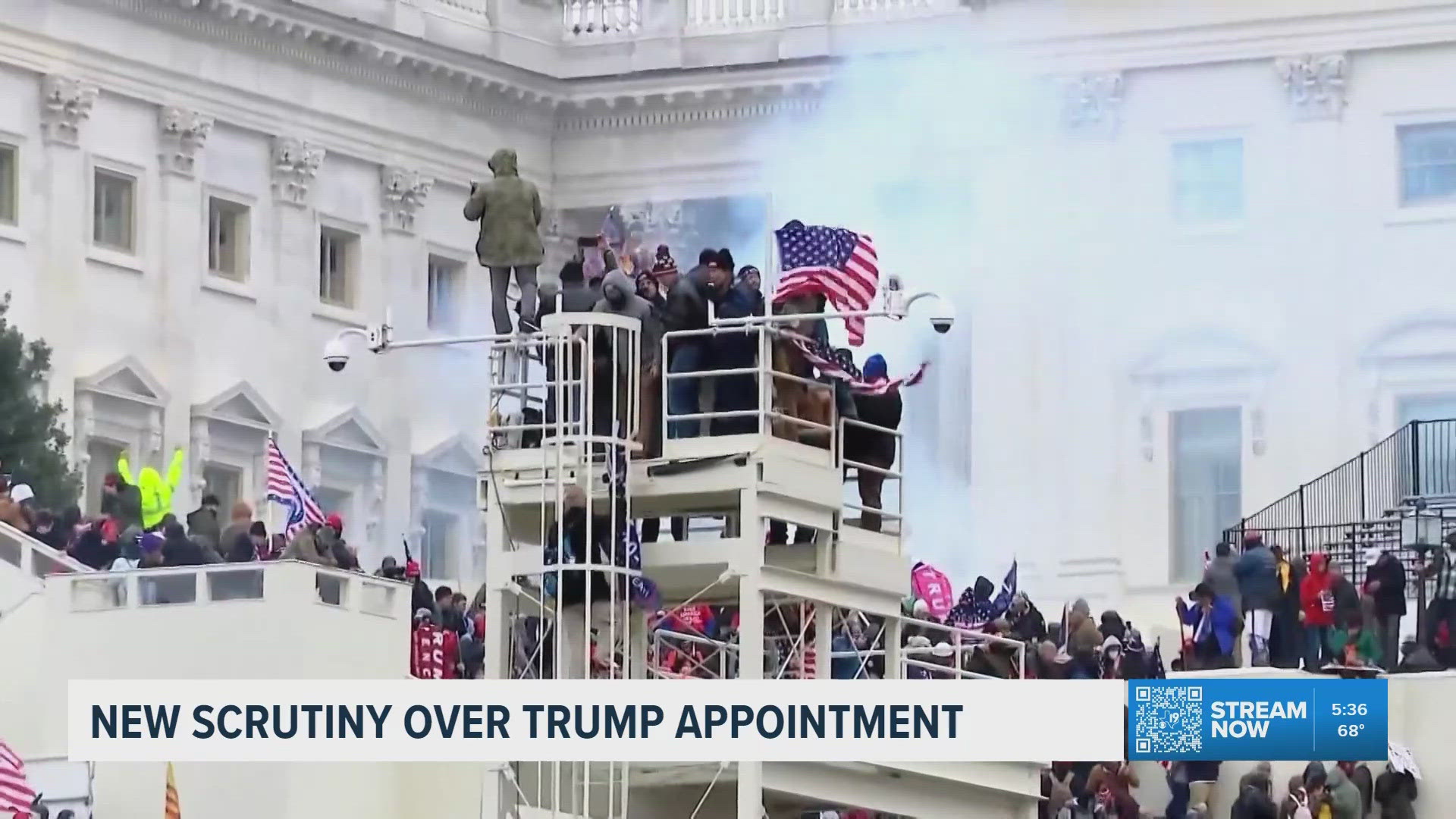
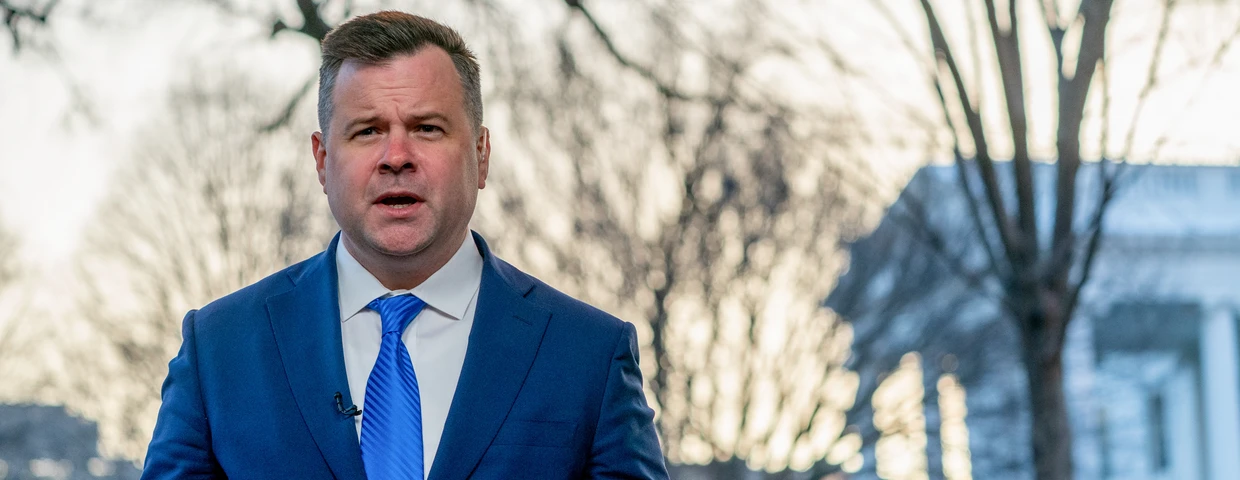
On Tuesday, June 2, Donald Trump announced on Truth Social that the new Acting Director of National Intelligence would be Bill Pulte.
Pulte, 37, is the grandson of a homebuilder. His primary government job is running the Federal Housing Finance Agency. His main qualification, as far as anyone can determine, is an extraordinary willingness to use the instruments of government to go after the people Donald Trump doesn't like.
Senator Elizabeth Warren, ranking member of the Senate Banking Committee, sized up the appointment in a single sentence: "What could go wrong?"
It wasn't a rhetorical question.
The Attack Dog: A Brief Biography
To understand what Pulte's appointment actually means, you need to understand who Pulte actually is — not the polished Truth Social persona, but the full record.
He is the grandson of William J. Pulte, who founded PulteGroup in Detroit and built it into one of America's largest homebuilders. By the time Bill Pulte was born in 1988, the family fortune was already built. What he added, over the following decades, was a talent for combat.
An Associated Press investigation last October concluded that "before Bill Pulte started targeting President Donald Trump's political enemies, he practiced on his own family." Court records from a bitter legal battle over PulteGroup's leadership show a picture that, in any other administration, would have been disqualifying. He reportedly called one relative "a fat slob," a "weirdo," and a "grifter." He was allegedly the driving force behind a website that described an aunt as a "fake Christian." He accused his grandfather's widow of insider trading. His boasts and online conduct were flagged as a concern by company officials. He developed 3 million followers on X partly by deploying this same energy against strangers.
In Trump's Washington, that is called a résumé.
He was confirmed as director of the Federal Housing Finance Agency in March 2025 — the regulator of Fannie Mae, Freddie Mac, and the Federal Home Loan Bank System, institutions that collectively underpin roughly seventy percent of the American mortgage market. It is, in normal times, a critical but unglamorous position. He made it anything but. He appointed himself chairman of both Fannie Mae and Freddie Mac after removing their independent board members — a step his targets' lawyers argued was itself illegal, since agency regulations require the chairs to be independent of the regulator. He then turned the vast mortgage databases under his supervision into a weapon.
The method was elegant in its viciousness. Pulte used his access to Fannie Mae and Freddie Mac records to comb through the private mortgage files of people who had crossed Donald Trump. When he found anything he could characterize as irregular — a secondary residence classification, an occupancy agreement, a discrepancy in how a home's primary use was described — he sent a criminal referral to the Justice Department. His targets included New York Attorney General Letitia James, who had won a landmark fraud judgment against Trump; Senator Adam Schiff of California; Federal Reserve Governor Lisa Cook, whose position Trump had sought to eliminate; and Representative Eric Swalwell of California.
All four denied any wrongdoing. Their lawyers described the referrals in terms that leave little to the imagination. Letitia James's legal team called it a violation of the Fifth Amendment, a "brazen, continuous disregard for the law and the Constitution," and alleged that the charges stemmed from Pulte improperly accessing records inside Fannie Mae itself — records that internal Fannie Mae officials privately acknowledged were "certainly not clear and convincing evidence" of any fraud. A federal judge agreed in part: James's indictment was dismissed on grounds that the interim U.S. attorney who secured it was improperly appointed. The Justice Department is reportedly seeking yet another indictment.
The Government Accountability Office launched an investigation into Pulte's conduct in December 2025. He responded to the growing scrutiny by firing ethics investigators and an acting Inspector General who were probing his behavior.
This is the man who, as of June 30, will oversee all eighteen American intelligence agencies, including the CIA and the National Security Agency.
A Law, and Its Violation
The Intelligence Reform and Terrorism Prevention Act of 2004, the legislation that created the Director of National Intelligence, did not leave the question of qualifications to chance. It stipulated, in plain language, that anyone appointed to the position "shall have extensive national security expertise."
Senator Mark Warner, vice-chair of the Senate Intelligence Committee, stood before a hearing this week and methodically read Pulte's record against that requirement. No time in the military. No time in Congress. No time in the diplomatic corps. No time in law enforcement. No time in intelligence, in any capacity, in any country, at any level.
"Mr. Pulte has none of that," Warner said. "Zero."
He paused before adding the assessment that cut through all the procedural language: "What qualifications does Mr. Pulte bring to the office? He has shown that he is willing to do anything that President Trump wants, legal or otherwise."
As an acting appointment — bypassing Senate confirmation — Pulte can hold the position for 210 days. The Senate cannot vote him down. Senators Cassidy, Collins, and Murkowski voted this week for a Democratic amendment that would have barred any confirmed head of a federal agency from simultaneously serving as DNI. The amendment failed 49-49, a near thing that nonetheless illustrated how unusual it is for three Republican senators to side with Democrats to check their own party's president.
Senate Majority Leader John Thune, who holds Trump's legislative agenda in his hands, did not endorse the appointment. He offered words that may be the most damning possible assessment of a cabinet pick from the president's own party: "We don't need a weaponized DNI. We need professionals there."
It is worth sitting with that sentence for a moment. The most powerful Republican in the Senate, asked about a nominee from a Republican president, warned publicly that the concern was weaponization. He did not say Pulte was inexperienced. He said the worry was that the intelligence apparatus would be turned against political opponents.
Even a former CIA station chief, speaking anonymously to CNBC because the professional consequences of going on record were too serious, put it simply: appointing a loyalist with no intelligence background is "emblematic that he doesn't have any respect or need for DNI."
The Keys to the Kingdom
Here is the part that should focus the mind.
The Director of National Intelligence does not just coordinate intelligence. The DNI oversees the most powerful surveillance apparatus in human history. The NSA alone processes more data daily than most countries generate in a year. Under Section 702 of the Foreign Intelligence Surveillance Act — the most powerful domestic surveillance authority in the American legal toolkit — the government conducts warrantless collection of communications from foreign targets, sweeping up, incidentally and by design, enormous volumes of communications involving Americans.
We know what Pulte did when he had access to mortgage databases. He used those records to target Letitia James, Adam Schiff, Lisa Cook, and Eric Swalwell — the four people who appeared on that list being not a random sampling of Americans but an almost exact map of prominent figures who had publicly crossed the current president.
Now consider what happens when the person who built that pattern at the FHFA gains access to something incomparably larger: intelligence reports, foreign intercepts, surveillance authorities, the full machinery by which the United States government monitors the world. Tulsi Gabbard already showed where this can lead — she made a criminal referral from the DNI's office targeting a whistleblower whose complaint had led to Trump's first impeachment, triggering a sweeping federal investigation run out of Miami. Pulte arrives with a more established track record and no counterbalancing reverence for the role.
Rep. Jim Himes, the top Democrat on the House Intelligence Committee, put it plainly: "Couldn't have picked a worse person."
Collateral Damage, Already Visible
The appointment has already broken things.
Section 702 of FISA — the surveillance authority that counterterrorism officials across both parties describe as essential — expires on June 12. Before Pulte was announced, a bipartisan deal to reauthorize it was within reach. After the announcement, Democrats moved to block its renewal, calculating, correctly, that the question of who oversees the program is inseparable from the question of whether the program is safe to extend.
On Friday, the Senate voted 47-52 on the motion to proceed to the reauthorization bill. It failed. Every Senate Democrat except one voted against it. Six Republicans joined them, though on separate privacy grounds. The most important spy tool in the American counterterrorism arsenal is now headed toward expiration because the president chose to put an attack dog with no intelligence experience in charge of the intelligence community.
Senate Majority Leader Thune called it a "dangerous mistake." Speaker Mike Johnson called the Democrats' response "absolutely outrageous." Both of these things can be true simultaneously, and the fact that they are is entirely the consequence of a single appointment made on a Tuesday afternoon with no apparent regard for the consequences.
The Pattern Holds
It would be a mistake to treat this as an isolated lapse in judgment. It is the continuation of a pattern so consistent that calling it a lapse at all strains credibility.
The pattern runs like this: identify a powerful government institution; install someone whose primary qualification is personal loyalty to the president; and direct the resulting power toward the suppression of political opposition. The Justice Department becomes a referral engine for settling scores. The FHFA becomes a tool for digging up private financial records on critics. The FBI makes raids on political adversaries. Independent inspectors general are fired. Ethics investigators are dismissed. The civil service is hollowed out and replaced with loyalists.
What changes when Pulte takes over the intelligence community is not the logic — it is the scale. A housing regulator with access to mortgage databases can target a handful of prominent names. A spy chief with access to eighteen agencies, foreign intercepts, domestic surveillance authorities, and the full information apparatus of a global superpower can, in principle, target anyone.
This is the definition of a weaponized state — and the person being handed the keys has a documented, court-record-confirmed, GAO-investigated history of using every lever available to him to hurt the people who oppose his patron.
The founders of this country understood this danger in the abstract. Americans in 2026 are watching it materialize in the concrete.
Courts will not save the moment. The 210-day acting appointment is legally available to the president; legal challenges to the statutory qualification requirements have uncertain odds and uncertain timelines. Congress showed this week that even a near-majority of senators are alarmed, but near-majorities do not win votes.
What remains is the thing that always remains in a democracy when institutional guardrails bend but do not break: the election.
November 2026 is a midterm election. Every seat in the House of Representatives is on the ballot. Thirty-four Senate seats are in play. The voters who are watching a housing regulator with a gift for retribution get handed the keys to the intelligence community — the voters who watched the Letitia James indictment get built on mortgage paperwork and dismissed by a federal judge — the voters who watched the Senate Majority Leader publicly warn against a "weaponized DNI" without being able to stop one from being installed — those voters will have a say.
The argument being made in Washington this week, by Republicans and Democrats alike, is that the intelligence community must remain independent of political pressure to function. The argument being made by this appointment is the opposite: that loyalty to one man is the only qualification that matters, and that the tools of the state exist to serve that loyalty.
One of these arguments will determine what kind of country this is.
The answer has to come from the ballot box. It is the only place left where it can.