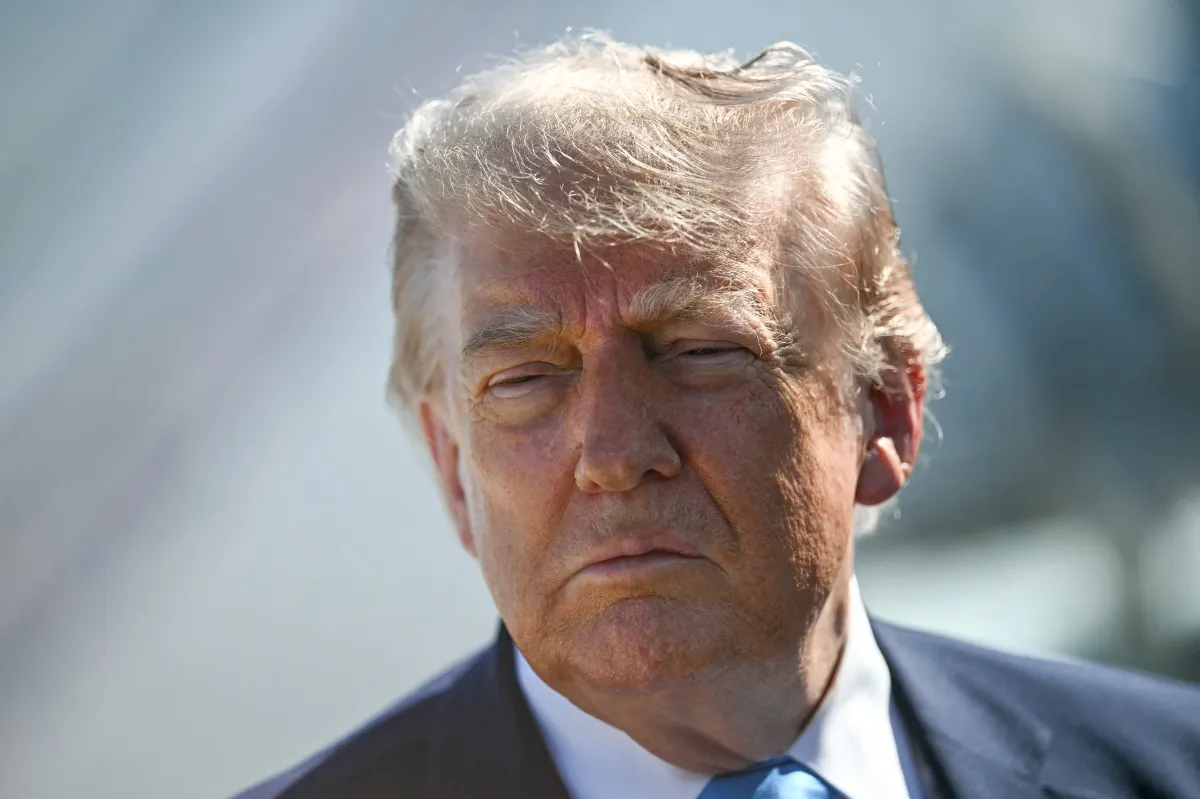
Sixteen months into Donald Trump's second term, something has shifted — not the anger, but where it lives.
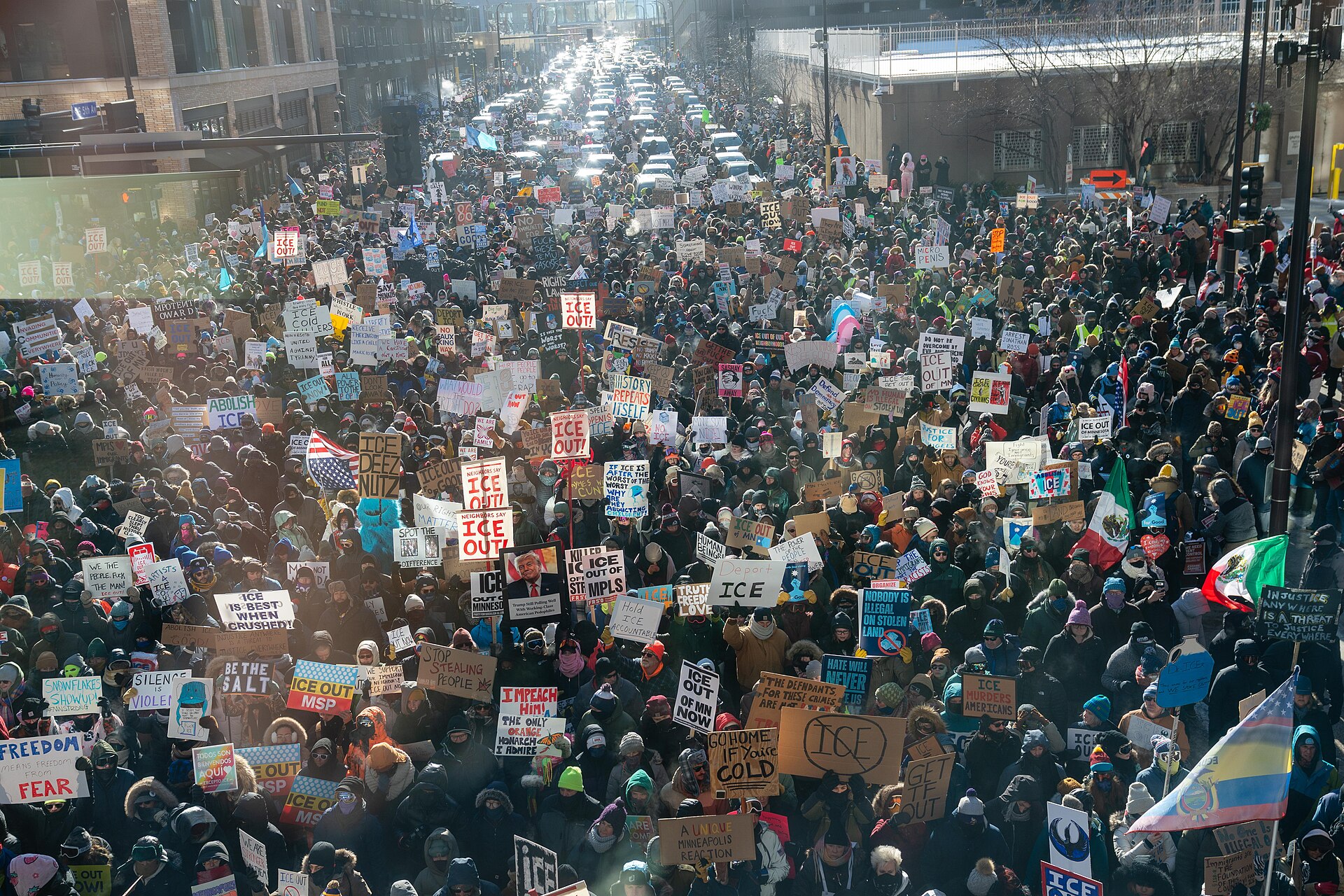
In St. Paul, Minnesota, on a Saturday morning in late March, a retired schoolteacher named Carol stood in front of a folding table she had hauled from her garage. She was handing out handmade signs near the Capitol rotunda. She had attended all three "No Kings" protests. She had driven three hours for the first one. This time, the rally was four blocks from her house. "The protests moved to us," she told a reporter. "We stopped waiting to be organized."
That small logistical shift — the protest arriving rather than departing — captures something essential about the resistance that has taken shape in the year and a half since Donald Trump returned to power. What began, tentatively, as a reprise of the 2017 Women's March playbook has evolved into something harder to map and, perhaps for that reason, harder to stop. The movement has grown not by consolidating around a single leader or organization but by fragmenting into thousands of local nodes: community groups, labor chapters, faith coalitions, neighborhood associations, roofers' unions. The center did not hold because there was no center to hold.
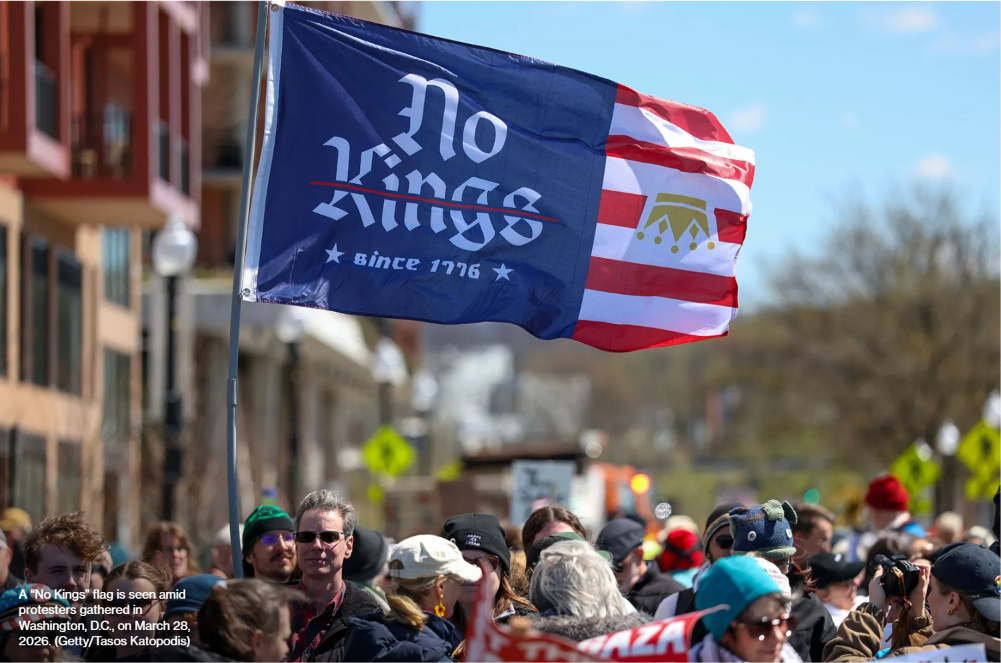
The numbers bear out what the people on the ground describe. According to data compiled by the Crowd Counting Consortium at Harvard University, anti-Trump protest activity has consistently and significantly outpaced pro-Trump rallies across the country. The Consortium documented major spikes in April 2025, when the "Hands Off" demonstrations drew an estimated three to five million people across more than 1,400 locations, and again in June and October 2025, when successive "No Kings" events drew roughly five million and seven million participants respectively — figures the Consortium described as among the largest single-day protests in American history. By March 28, 2026, the Center for American Progress estimated that the third iteration of "No Kings" had reached eight million participants in approximately 3,300 cities and towns across all fifty states. The protests had spread, according to organizers, into districts that had voted for Trump in 2024 and, notably, into fifteen countries beyond the United States.
These are extraordinary numbers, and they require a qualifier: protest size is notoriously difficult to measure, and organizers have an obvious incentive to report high. But even skeptics of crowd-count methodology acknowledge the trend is real. The Crowd Counting Consortium itself noted that its data "rebut the narrative that there is 'no resistance' to the second Trump administration." The trajectory is not ambiguous.
What the numbers don't capture is the texture. The 50501 movement — its name originally an abbreviation for "50 protests, 50 states, one day" — traces its origins to a Reddit thread in early 2025, organized by people with no budget, no central structure, and no official affiliation. That improvised model has proven durable. By January 30, 2026, according to the Museum of Protest, the same network helped coordinate a fifty-state economic blackout in 72 hours, drawing on labor unions, student organizations, faith communities, and small businesses. The catalyst was not an election or a legislative vote but a specific, local tragedy: the death of Renée Good, a 37-year-old poet and mother of three, shot by an ICE agent in Minneapolis on January 7 during what the Department of Homeland Security called "Operation Metro Surge," a deployment of an estimated 2,000 to 3,000 federal immigration agents into the Twin Cities. Within weeks, the sustained pressure from Minnesota protesters had, according to the Center for American Progress, forced the administration to end Operation Metro Surge and sharply curtail public enforcement activity in the state. It was, for the movement, something new: a concrete, datable, verifiable win.
The lawyers noticed. Over the past year and a half, the legal architecture of resistance has expanded in parallel with the street-level mobilization, and in some ways with more measurable effect. A coalition of twenty-three attorneys general from Democratic states and the District of Columbia had been planning litigation before Trump's second inauguration, guided partly by their study of the Heritage Foundation's Project 2025, which had telegraphed the administration's intentions with unusual candor. The first lawsuit was filed the day after the swearing-in, challenging the administration's attempt to end birthright citizenship. By January 2026, according to Stateline, the coalition had filed 71 lawsuits, a record pace. According to a tracker maintained by the Progressive State Leaders Committee, state attorneys general had won 43 of the 53 resolved cases.
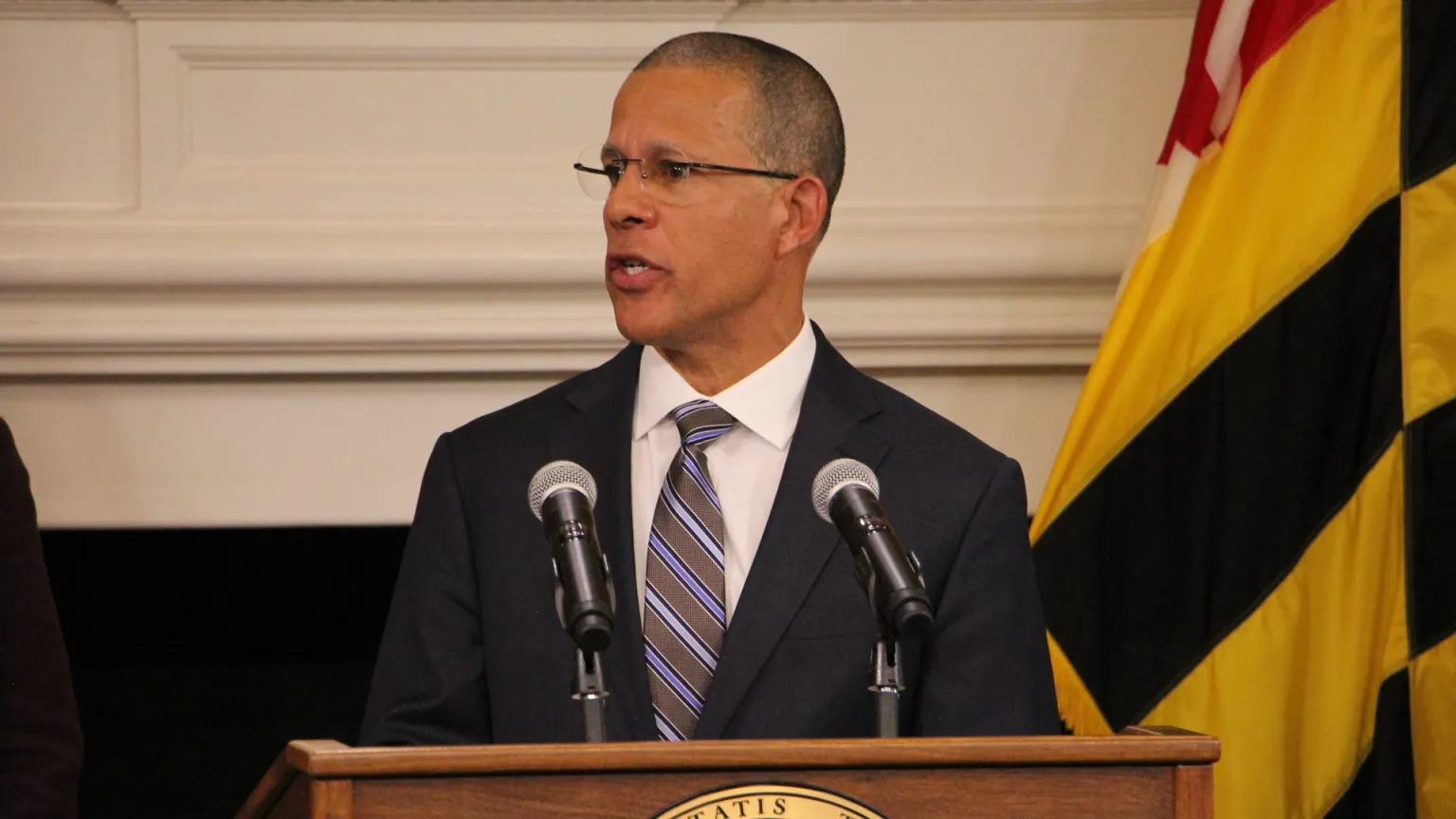
The suits range across nearly every domain of federal action. A coalition led by Massachusetts, California, Nevada, and Washington — eventually joined by 24 total states — challenged a Trump executive order in April 2026 that sought to impose federal restrictions on mail voting and voter eligibility ahead of the 2026 midterms. The attorneys general argued the order would upend existing state election procedures within weeks of primary elections, potentially disenfranchising millions who had voted by mail for decades, including military families and rural residents. Oregon's Dan Rayfield, described by Stateline as one of the most prolific litigators in the coalition with 52 suits led or joined, has framed the legal effort in explicitly institutional terms: "It's not a slogan or a political brand." Maryland's Anthony Brown has articulated the stakes more starkly, describing the coalition's central mission as protecting "the rule of law" at a moment when it cannot take institutional protection for granted.
The courts have been, to a meaningful degree, receptive. But some legal scholars have begun to raise a quiet concern: that the sheer volume of partisan state litigation, multiplied across two administrations in quick succession, risks corroding the judiciary's perceived neutrality — turning the courts into another arena of political combat rather than a check upon it.
Inside the federal government itself, the resistance has taken a quieter, more precarious form. A March 2026 survey from the Partnership for Public Service found that nearly sixty percent of federal employees reported that their engagement had decreased since 2024. The mood is not revolt but erosion: people doing less, communicating less, documenting more. In February 2026, the administration finalized a rule — long pursued by conservative operatives — stripping civil service protections from tens of thousands of government workers whose roles were deemed "policy-influencing." The 250-page rule, reported by HuffPost, cited what it called "policy resistance" as a fireable offense, including, as an example, scientific reports from Trump's first term affirming the reality of climate change. The message was explicit: dissent as a professional act would now carry professional consequences.
And yet the federal workers have not disappeared quietly. In Philadelphia, workers gathered in front of Independence Hall, calling their action "Save Our Services Day of Action." The city's councilmembers warned that layoffs at Independence National Historic Park could disrupt plans for the country's 250th birthday celebrations in 2026. The juxtaposition was almost too pointed to use: the nation's founding documents housed in a building whose caretakers had been let go.
Within the Republican Party, the contradictions have become harder to manage as the midterm elections approach. Trump's grip on his coalition has been simultaneously tightened and tested. Senator Bill Cassidy of Louisiana, who had voted to convict Trump after January 6, lost his primary in May 2026 to a Trump-backed challenger — ending a two-decade career. Representative Thomas Massie of Kentucky, a libertarian who had voted against the administration's signature tax bill, challenged the classification of secret Epstein files, and opposed the war in Iran, was also defeated in his primary after Trump personally lobbied Kentucky voters against him. The message was unmistakable.
But, as Newsweek noted, the victories may carry an ironic cost: legislators who have already lost their primaries face no further threat from the president, and several have wasted no time in demonstrating it. Cassidy, within days of his concession speech, publicly criticized the administration's proposed $1.8 billion "anti-weaponization" fund, writing on social media that Americans were worried about paying their mortgages, not about funding what he called an accountability-free slush fund for the president's allies. According to CNN, Republican senators across both chambers have grown privately restive — one unnamed source reportedly told the network, "All 53 Republican senators are not happy right now." The dissent remains, for now, scattered and episodic. But with six months until the midterms, and the administration pursuing policies on Iran, immigration, and spending that poll poorly with swing-state voters, the calculations are shifting.
The movement that has grown up outside those walls is grappling with its own questions of sustainability and direction. The Women's March of 2017 flared brilliantly and faded. Occupy Wall Street, the Tea Party, Black Lives Matter — each wave of mobilization has taught its own lessons about the gap between protest and power. An analysis by the Carnegie Endowment for International Peace, published after the March 2026 demonstrations, noted that mass protests succeed in checking authoritarian tendencies not simply by filling streets but by shifting the balance of power — shrinking support for the government and growing the coalition of opposition actors. The No Kings movement, Carnegie argued, had done something structurally distinctive: by hosting rallies across hundreds of locations rather than converging on a single symbolic site, organizers had lowered the barriers to participation and, crucially, strengthened local civic networks in places where Trump enjoys genuine support.
The question now — asked openly by labor organizers and quietly by Democratic strategists — is what becomes of that network as it gets pulled toward electoral machinery. International Viewpoint, a socialist publication covering the movement's internal debates, noted in March that after May Day, there would be a strong institutional push from organizations like Indivisible to orient the protest energy toward the November midterms, which some within the movement fear would have a "demobilizing effect." The Axios data is not reassuring in a different direction: survey data shared by movement researcher Dana Fisher showed that as of January 16, 2026, 34 percent of protesters polled agreed that Americans "may have to resort to violence in order to save our country" — up 11 percentage points from the October No Kings protests.
That number sits in the air like a weather reading no one wants to discuss at the table. The movement has been, by every observable measure, peaceful. Its leaders have been deliberate about that. But fatigue has a way of migrating into despair, and despair into something harder to predict.
What is unambiguous is that this is not 2017. The movement that took shape across the second term has been larger, more geographically distributed, more tactically varied, and — in at least one documented case — more effective than its predecessor. The schools and unions and roofers and retired teachers and state attorneys general and civil servants quietly filling out extra documentation are not waiting to be told what to do. They have been, for sixteen months, building something without a name for it yet. The country in motion does not look the same from every vantage point. From Carol's folding table in St. Paul, it looks like neighbors.
References
- As Americans Deepen Their Nonviolent Mobilization, the Trump Administration Begins To Make Concessions — Center for American Progress (March 2026)
- May Day protest organizers call for boycott of work, school and shopping — NPR (May 2026)
- 50501 protests — Wikipedia
- Democratic state AGs will lead opposition to Trump in new year — Stateline (January 2026)
- Attorney General Mayes and Secretary of State Fontes Sue Trump Administration over Unlawful Executive Order — Arizona Attorney General (April 2026)
- State Attorneys General Are Fighting Trump's Agenda — SAN (January 2026)
- January 23, 2026 Minnesota protests against ICE — Wikipedia
- How Organizers Coordinated a 50-State Economic Blackout in 72 Hours — Museum of Protest (January 2026)
- Anti-Trump Protests Outweigh Supporter Rallies — Statista (2026)
- Trump Admin Makes It Easier To Fire Federal Workers — HuffPost (February 2026)
- Under Trump 2.0, federal employees disengaged, dissatisfied, survey shows — Federal News Network (March 2026)
- Sen. Bill Cassidy's defeat shows the price of dissent in Trump's Republican Party — NBC News (May 2026)
- Donald Trump Faces Growing Republican Revolt Against Key Priorities — Newsweek (May 2026)
- 'Senators are not happy': How Trump pushed the GOP to the breaking point this week — CNN (May 2026)
- Protests Like No Kings Can Only Go So Far to Stem Authoritarianism — Carnegie Endowment for International Peace (April 2026)
- "We will be ungovernable": Resistance 2.0 pivots to disruption — Axios (January 2026)
- Growing Convergence of the Anti-Trump movement in the US — International Viewpoint (March 2026)
- What's Next for the Normie Anti-Trump Protest Movement? — The New Republic (January 2026)