
Seattle's symbols have traditionally been objects of local pride - Boeing, Amazon, Microsoft, coffee, salmon, Kurt Cobain. In July the list gained a likable raccoon with a congenital spinal deformity who lives somewhere inside the city limits, in Ballard. The choice, it has to be said, was unanimous - a rare case around here of nobody in town arguing with anybody.
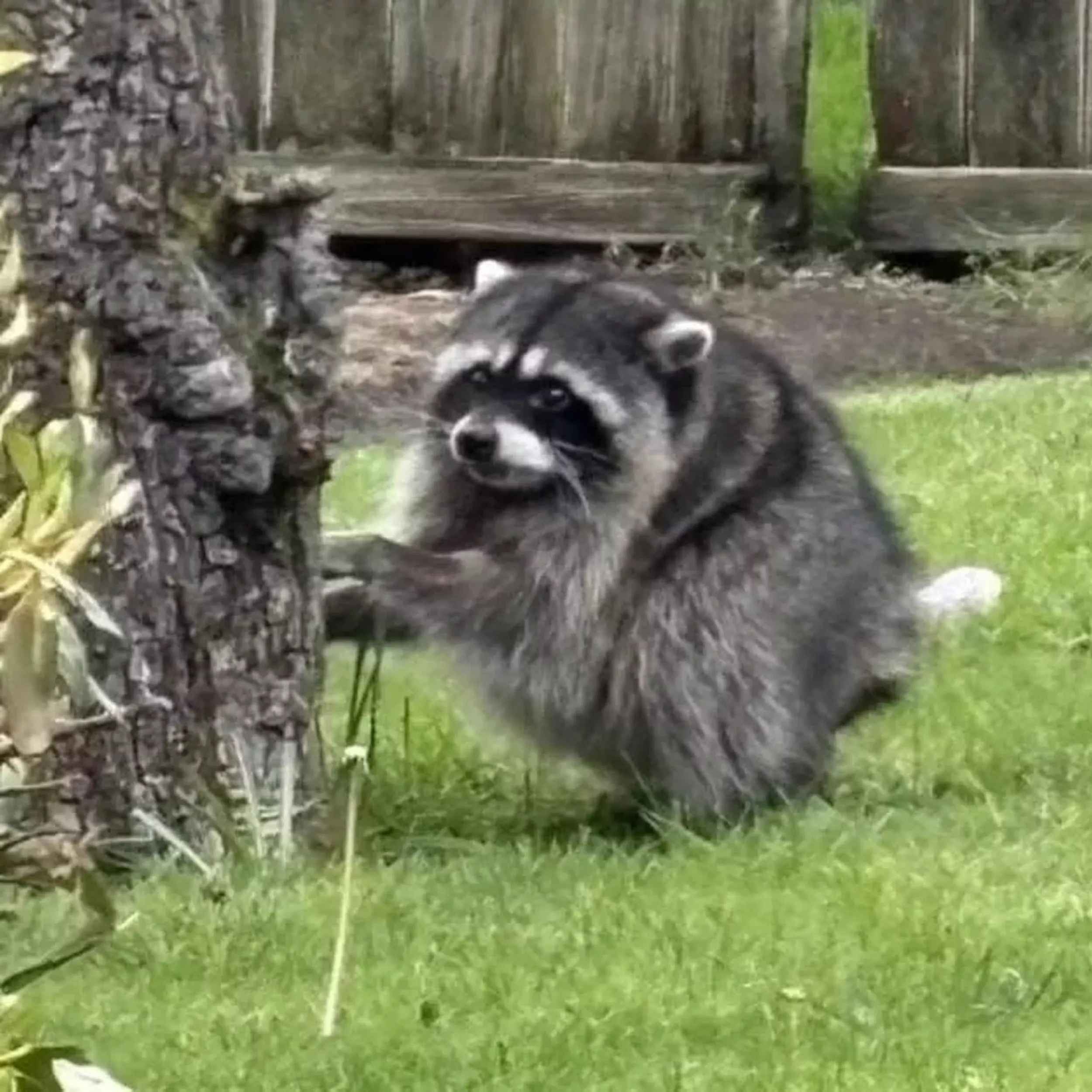
It started on the evening of July 13. Kiana Hall was out walking with her husband in Ballard, near the local Goodwill, when she noticed something moving under a parked car, assumed it was a cat (she likes cats, which is why she started filming), was wrong, and kept filming anyway. In the five-second clip, a creature crosses the grass with an ordinary raccoon face, long legs, a stubby tail and a fluffy sphere where the torso should be: as though the animal had been taken by the nose and the tail and squeezed slightly, and had not objected. The voice off camera delivers the line that became the motto of the whole summer: "What am I looking at?" She came up with the name on the spot, while writing the caption - he simply looked like a Jimothy. By the end of the week the video had seven million views, and by now more than ten if you count the reposts. Hall, who works in marketing, later summed up her own condition this way: "I'm confused, but I'm pleased."
Ballard is the northwest corner of Seattle, and until 1907 it was a city in its own right, the sixth largest in the state. Sawmills and a fishing fleet worked here, Ballard was known as the shingle capital of the world, and Norwegians, Swedes, Danes and Finns came for that work - the climate suited them, so did the fjord-like channels, so did the salmon. What remains from those years is the Nordic Museum, the statue of Leif Erikson (the Scandinavian seafarer of the tenth and eleventh centuries, considered the first European to reach North America, roughly 500 years before Columbus; his father, Erik the Red, founded the settlement in Greenland), the largest May 17 parade outside Norway, and the famous locks, where people come in summer to watch the salmon run. From more recent decades there are breweries, a Sunday farmers market and expensive housing. Old cedars grow in the backyards, and raccoons like to live in them.
Once Jimothy became popular, the veterinarians immediately canvassed by local TV stations converged on a diagnosis: short spine syndrome, a congenital anomaly in which the vertebrae fuse and shorten while the legs stay their normal length - hence the proportions. The important part of the whole story is that Jimothy appears to be perfectly healthy: he does not limp, he is not in pain, he climbs fences and forages as well as the rest of them. Another Ballard resident, Ben Trammell, posted old footage of a very small Jimothy walking along the top of a fence with his mother and two littermates; by his account the mother watched the odd kit especially closely, steadied him, and sometimes simply carried him. A neighbor, Dmitriy Ishimskiy, showed clips from the summer of 2025: Jimothy sitting on his fence and digging around for food. He also admitted that he had not seen the animal for about six months and had been wondering all that time what had become of him. Jimothy's sex, incidentally, has never been established and nobody intends to establish it.
Names and titles arrived quickly. "Hot Jimothy Summer," after the "hot girl summer" meme. "Short king," the standing compliment for men who are not tall; Jon Stewart used it on "The Daily Show," offering his verdict that this is what Jimothy is. "Saint Jimothy" and "King Jimothy," with the iconography to match: halos, stained glass, hagiographic panels. "In Jimothy we trust," a rewrite of the motto on the dollar. "Protect him at all costs," the standard formula of internet tenderness, left under one of the clips by the official account of the Slim Jim meat snack brand, which moved the whole thing definitively into the category of national folklore.
The street artist Andrew Miller painted a wall in the alley beside the Ballard Clay pottery studio on Market Street as early as July 17: Jimothy is shown foraging, and by a happy coincidence there is a garbage can next to the wall. Miller, as it happens, also painted the mural at Mike's Chili Parlor, Ballard's oldest diner, and he knows exactly what he is doing: in an interview he said he grew up on stories about the Wheedle and on the forest creatures from local TV commercials, and that images like these live in a city's memory for decades. Another Seattle artist, Ryan Henry Ward, known here simply as Henry, made an acrylic painting of Jimothy and put it up for charity auction - it went for about $6,500 to benefit the Ballard Food Bank. Then something nobody had planned happened: Amazon, T-Mobile, Alaska Airlines and the running shoe company Brooks made matching donations of the same size. In a week the raccoon raised more for feeding people in need than a mid-sized city charity campaign does.
The city made it official on July 26. In Bergen Place Park in Ballard, city councilmembers Alexis Mercedes Rinck and Dan Strauss read out a proclamation declaring the summer of 2026 "Jimothy Summer." An art competition was held on the spot: dozens of entries, a show of hands to vote, and the winner was Virginia McFadden's stained glass "Saint Jimothy," which was hung in City Hall for the summer; Kayla Carabes's oil painting "Jimothy Takes Seattle" was displayed alongside it. The University of Washington granted the raccoon an honorary doctorate - he is now Dr. Jimothy. Washington State University, UW's traditional rival on the other side of the state, promptly declared Jimothy one of its own. Governor Bob Ferguson named him "Washingtonian of the Day" on August 1, for resilience. Google put an easter egg in search: type "Jimothy" and a raccoon ran across the screen (they seem to have taken it down).
Alaska Airlines reminded passengers that raccoons, Jimothy included, are not permitted on flights. Orlando International Airport added "visit Jimothy" to the list of summer suggestions for travelers. The tire manufacturer Goodyear posted something to the effect of: if Jimothy is crossing the road, your brakes had better work - check your tread. (The technique has a name, newsjacking: you take somebody else's viral story and attach your product to it.)
The games industry reacted quickly and cheerfully too. It began when the official World of Warcraft account posted a render of what Jimothy would look like inside the game. From there it went down the chain. RuneScape drew him in its old pixel style. Dead by Daylight produced a sinister version with glowing eyes. The Sims posted a Sims-world interpretation that, judging by the reaction, came out slightly frightening. Halo hid Jimothy in two in-game locations, in one of them wearing armor. Warner Bros. Games reported that Jimothy had reached Gotham. Among Us drew him next to a crewmate. Dungeons & Dragons published a full stat block, formally entering the raccoon into the rules of a tabletop game. The detective noir Mouse: P.I. For Hire redrew him in the style of 1930s cartoons. Even Blizzard gave in to fan pressure and announced that Jimothy would be added to World of Warcraft for real, as a battle pet, in an upcoming patch. The announcement was short: you asked, Jimothy answered.
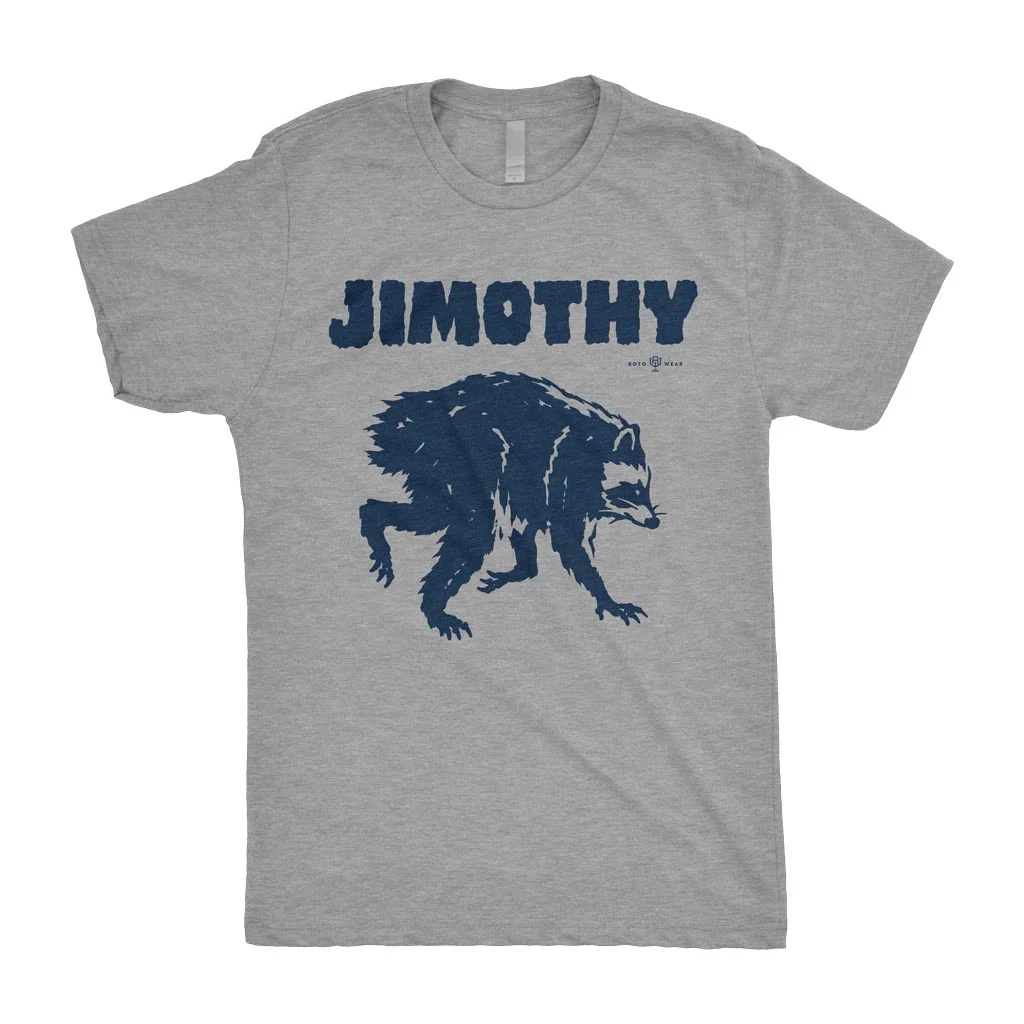
An economy developed as well. Within days Etsy and Amazon filled with Jimothy goods: T-shirts, mugs, stickers, pins, magnets, vinyl decals for cars, badge reels (particularly popular with nurses), 3D-printed figurines, handmade needle-felted statuettes, crochet patterns and Lego build kits. The National Bobblehead Hall of Fame and Museum released what it called the first officially licensed Jimothy figure: six inches, limited edition, shipping in December, with $1,000 of the proceeds going to a Seattle animal shelter. The word "licensed" should be taken with a sense of humor here. Several people tried to register rights to the image, but it turned out that a wild raccoon has no owner, and therefore nobody can hold any rights to him. Jimothy is public domain in the most literal sense available.
Alongside the business and the marketing there has been a serious discussion. Professor Helen Deutsch of UCLA, who teaches a course on disability aesthetics and the history of ideas about the normal body, observed that people have always been fascinated by departures from familiar form, and that the distinction that matters here is between staring and wonder. What she dislikes in the current reaction to Jimothy is one note that keeps turning up in the coverage - "even he deserves love." Jimothy is not heroically overcoming anything: he simply lives the way he can, and he manages it well enough.
A Seattle elementary school teacher, meanwhile, plans to use him in class with second and third graders - the conversation about looking different being easier to have through a raccoon than through people.
Jimothy is a wild animal. Looking and filming are fine; approaching and feeding are not. A fed raccoon loses its caution, comes out toward people and cars, and that can end badly. City health officials note that rabies is not common among raccoons here, but that the possibility cannot be ruled out entirely. Wildlife protection organizations have issued statements of their own, to the effect that the best way to show Jimothy any affection is to leave him alone.
A year ago an older animal of similar build was filmed in the same blocks, and people nicknamed him Danny DeVito; some think he is Jimothy's parent, and some still mistake the old footage for new. Raccoons live three to five years, while stories about the strange round raccoon in Ballard go back longer than that. So it is possible that there is not one Jimothy but a whole family line that has only now been noticed. He comes out at night to check whether anyone has left cat food on the porch, and disappears for the day. He demonstrates that happiness is not a matter of good looks. Better to stay yourself and be strange.
.webp)