Imagine your city suddenly decided to build a hundred huge ships in one year. Not little boats, but real giant ships, each as big as several houses! That’s what happened in Seattle more than a hundred years ago, and that story changed the city forever — although it all began with a big problem.
When the Whole World Asked Seattle for Help
In 1917 World War I was underway and America entered the war. The problem was that German submarines were sinking ships faster than they could be built. Food, weapons, soldiers — all needed to be moved across the ocean, but there was a catastrophic shortage of ships. The government turned to various cities with a plea: “Help us build ships. Lots of ships. Very quickly!”
Seattle answered: “We’ll try!” And something incredible began.
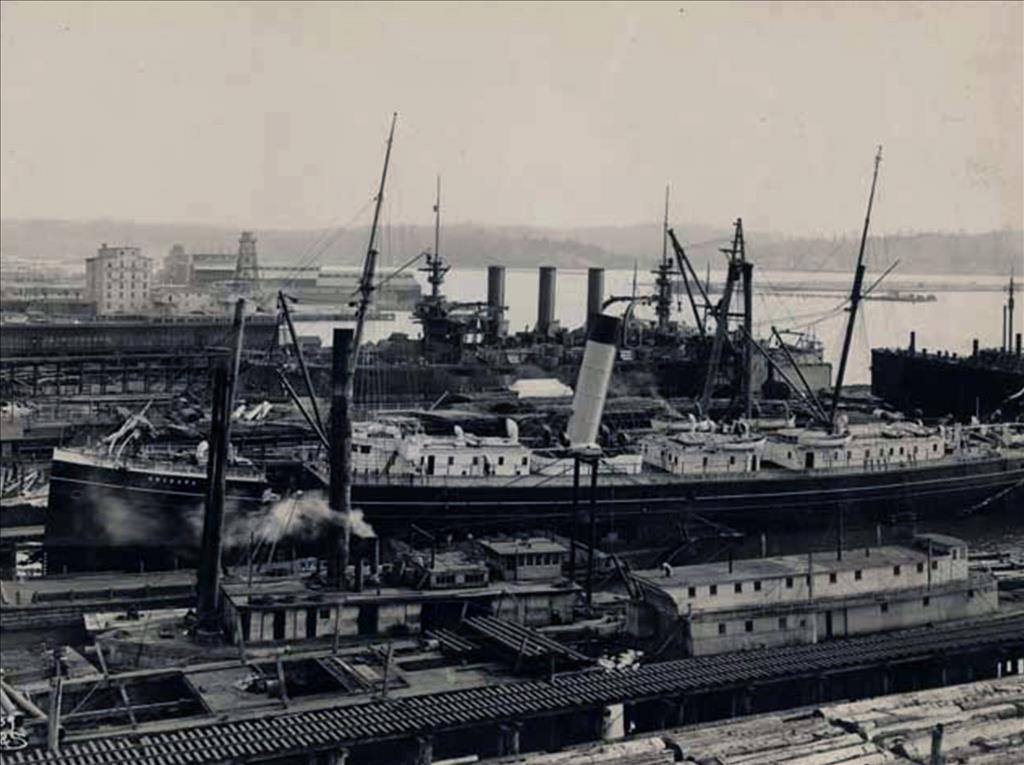
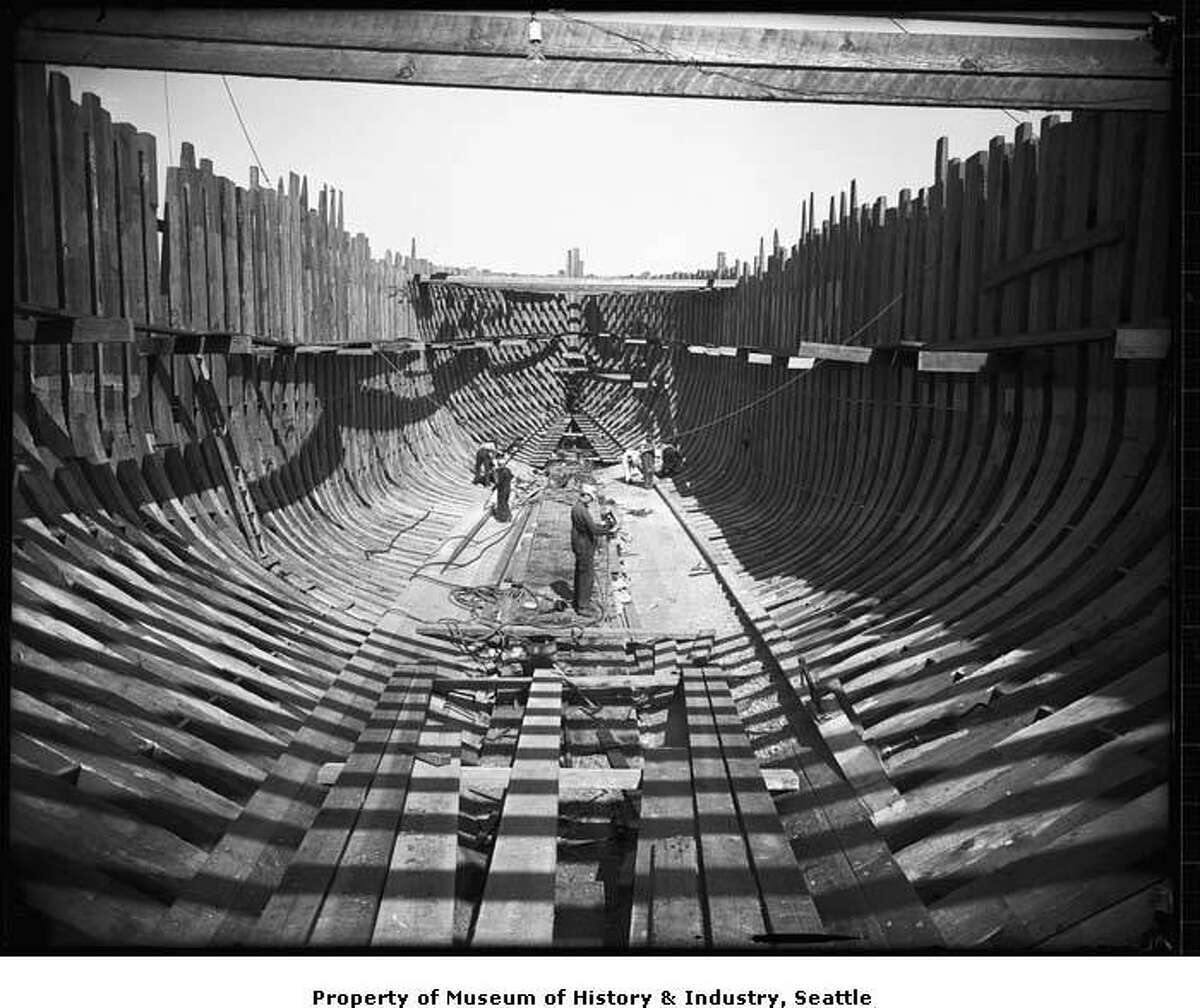
The Skinner & Eddy company (named for two businessman friends who founded it) decided to build ships in a way no one had used before. Normally a ship was built slowly, over months, crafting each piece separately right on the shipyard. But Skinner and Eddy invented another method: they made sections of the ship at different factories around the city, like pieces of a construction set, then brought them to the water and quickly assembled them together!
It was like building with LEGO: first you make separate parts — walls, roof, doors — and then you connect everything. Only instead of plastic bricks there were gigantic metal sections weighing several tons.
A Record That Shocked the World
The results were astonishing. Normally a large ship took 6–8 months to build. Skinner & Eddy built their first ship in 3 months. Then in 2 months. And once, in 1918, they set a world record: a ship called Valdivia was built in just 35 days! Less than a month and a half!
For Seattle this meant incredible changes. Thousands and thousands of people came to the city to work on the shipyards. Entire neighborhoods sprang up in a few months — builders erected homes for workers as fast as the ships were built. Historians say some streets appeared so quickly the city didn’t even have time to name them!
| What was happening | Before the war (1914) | During the boom (1918) |
|---|---|---|
| Shipyard workers | About 2,000 | More than 35,000 |
| Ships per year | 5–10 | More than 100 |
| Time to build a ship | 6–8 months | 35–90 days |
| Seattle population | About 280,000 | About 320,000 |
The Problem No One Expected
Then something nobody foresaw happened. In November 1918 the war suddenly ended! Everyone celebrated, of course, but for Seattle this became a big problem. You see, you can’t stop a ship’s construction halfway — if you start building a ship, you have to finish it. As a result, Seattle continued building ships for several months after the war had already ended.
Imagine: you prepared for a school play, sewed a costume, learned your lines, and suddenly they say the play is cancelled. Except instead of one costume — dozens of enormous ships that nobody needs anymore!
By 1920 more than 200 ships had been built in Seattle. Many of them just sat at the piers because buyers couldn’t be found. The government no longer needed military transports. Shipping companies weren’t in a hurry to buy new vessels. And thousands of workers — carpenters, welders, engineers — were left without jobs.
My grandfather used to tell a story (though he’d heard it from his grandfather) that ships sat in rows in the bay like forgotten toys, and gulls nested on them. Some ships never sailed at all!
When a Problem Turned into a Treasure
But here’s the interesting part: that “problem” actually became a gift for Seattle. Yes — really!
You see, all those thousands of people who had learned how to build complex things quickly didn’t leave. They stayed in the city. And they began applying their skills to other purposes.
Engineers who devised ways to assemble ships rapidly started working on airplanes. That’s why later Seattle became home to Boeing, which grew into one of the world’s largest airplane manufacturers. The same principles — making parts separately and quickly putting them together — worked perfectly for aircraft too!
Carpenters and builders who erected housing for shipyard workers kept building the city. Many Seattle neighborhoods that still exist today were built by those people in the 1920s.
And the steel mills that made metal for ships switched to other products. Some began producing parts for cars, others — structures for bridges and buildings.
Most remarkable was the work culture that remained in the city. Seattle learned to think: “How can we do this faster? How can we do it better? How can we use new methods?” That habit of looking for new solutions, experimenting, and not being afraid to try unusual approaches came from those years when the city built ships at an incredible pace.
What the Ships Left the City
Today, when you walk around Seattle, you won’t see those ships — most of them are long gone. But if you know where to look, you can find traces of that amazing story.
In a neighborhood called Ballard, some old shipyard buildings still stand. Some have been turned into museums, others into trendy restaurants and shops. But the walls remember the times when thousands of people worked there day and night, creating ships faster than anyone in the world.
There’s a small park by the water where a monument stands — a huge ship anchor. A plaque tells of the days when Seattle built a fleet for victory in the war.
And most importantly — Seattle preserved its inventive spirit. The city that learned to build ships in 35 days later created computer programs used worldwide, built airplanes that fly to every country, and invented ways to care for the environment and the ocean.
The ship story taught Seattle an important lesson: sometimes what seems like a big problem (too many ships, too many unemployed workers) can actually be the start of something amazing. The key is not to be afraid to look for new paths and to use what you learned for new goals.
And you know what I think? Maybe when you grow up and face a problem, you’ll remember this story and think: “Maybe this isn’t just a problem, but the beginning of something interesting?”