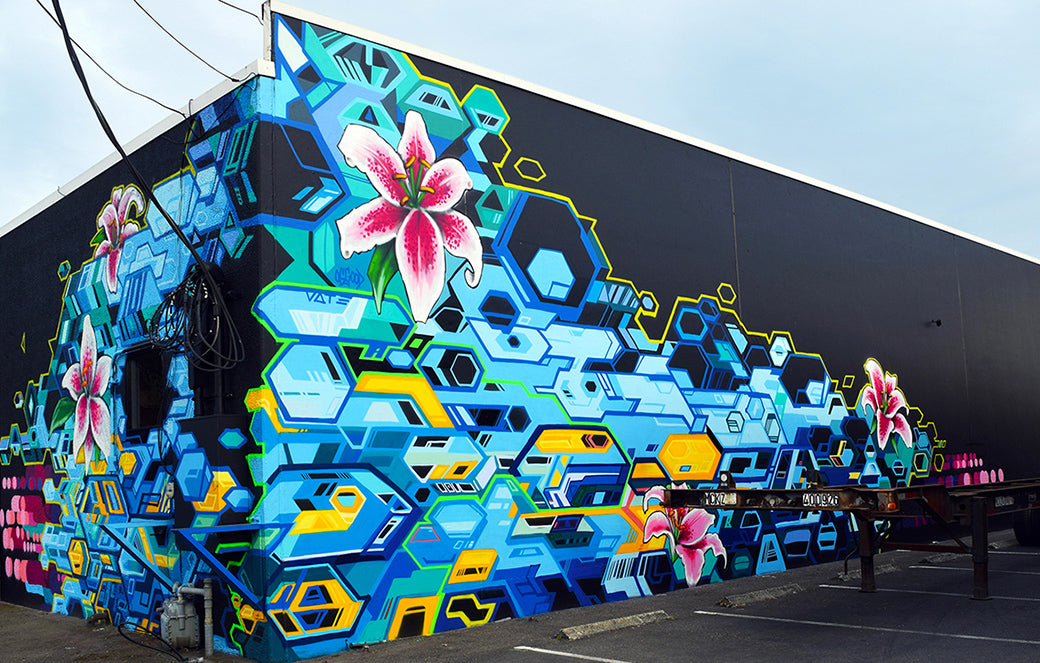
Imagine a huge old building where airplanes were once built. It has stood empty for years, paint peeling, windows broken. City officials say, "This building is ugly and useless, let’s demolish it!" And neighborhood residents reply, "Wait! Give us just one month." Then something incredible happens — hundreds of people show up with brushes and paint and turn dull gray walls into a giant art gallery. This is the true story of how ordinary people in Seattle’s Georgetown came up with an unusual way to protect their past and build a future.
When factories fall silent and a neighborhood becomes invisible
Georgetown is an old industrial neighborhood in south Seattle. In the early 1900s its factories roared, smokestacks billowed, and thousands worked there. They brewed beer, built boats, repaired airplanes. But by the end of the 20th century everything changed. Factories closed one after another. Large buildings stood empty like sleeping giants. People moved away because the jobs were gone.
By the 1990s Georgetown had become quiet, a forgotten place. Many buildings were abandoned. Owners didn’t know what to do with them. Some wanted to tear everything down and build something new — maybe warehouses or parking lots. To the city that seemed logical: why keep old, unsightly buildings?
But among those who remained in Georgetown were people who remembered how vibrant the neighborhood had been. They recalled stories of parents and grandparents who worked in those factories. For them, these buildings were not just bricks and concrete — they were memory, the history of their families and the city.
Artists who saw treasure in the rust
In the late 1990s artists and creative people began to move into Georgetown. Why? Because rents for old factory spaces were very cheap. An artist needs a lot of room to work — room for big canvases, storage for materials, space to make sculptures. In the city center such a space would cost a fortune, but in Georgetown you could rent an entire floor of an old factory for little money.
Gradually artists began turning empty workshops into studios. Sculptors, painters, metalworkers, ceramicists — they all found the old industrial buildings ideal for creativity. High ceilings, large windows, sturdy walls — all suited art-making perfectly.
Most importantly, artists saw beauty in these buildings that others overlooked. They looked at rusted beams and thought, "What an interesting texture!" They saw old brick walls and said, "What stories lie in each stone!" To them Georgetown wasn’t a dreary place but a treasure trove full of possibilities.
The day the whole neighborhood picked up paintbrushes
In 2002 an event occurred that changed everything. The owner of one of the largest buildings — an old aircraft factory — decided to sell. The buyer planned to demolish the building and put something more "modern" in its place. Several art studios operated in the building, and all of them were to be evicted.
Artists and local residents were desperate. They tried to convince officials that the building should be preserved, but bureaucrats replied, "It’s just an old factory; there’s nothing special about it. There’s no reason to protect it." Technically they were right — the building was not an official historic landmark, and nothing "important" had happened there in the historical record.
So the neighborhood came up with a brilliant plan. They organized an "Art Attack" — a mass event inviting everyone to come and paint the building’s walls. The idea was simple: if the building became a work of art, it would be much harder to demolish. Who would tear down a giant art gallery?
On the appointed day hundreds of people arrived. Artists came with their paints. Families with children showed up. Elderly former workers who had once been employed at the factory came too. Each person was assigned a section of wall and could paint whatever they wanted. Some painted flowers and birds. Others created abstract patterns. Children painted their favorite animals and heroes. Former workers painted airplanes and tools that recalled the old days.
How paint proved stronger than the bulldozer
The event attracted huge attention. Local newspapers covered it. Television ran reports. People from other parts of Seattle came to see the painted building. It really became an attraction.
Most importantly, attitudes changed. City officials saw that the building mattered to people. It became a symbol of community activism, creativity, and unity. To demolish it would now mean going against the will of hundreds who had poured labor and soul into it.
The building was saved. It was converted into a center for artists and workshops. Today dozens of creatives work there, exhibitions and workshops are held. The story of the "Art Attack" became a Georgetown legend.
This success inspired residents to launch other projects. They began organizing monthly "Art Walks" — evenings when all studios open their doors to visitors. People can go from studio to studio, watch artists at work, buy pieces, and interact. These events turned Georgetown into a popular destination for art lovers.
The secret of success: when everyone works together
Why did Georgetown residents achieve what many other neighborhoods could not? The secret was they didn’t just protest — they offered an alternative. Instead of shouting "Don’t demolish it!" they showed, "Look what can be done with this building!"
They also understood an important thing: to protect a place, you must make it meaningful to many people, not just a few activists. When hundreds came to paint the walls, each person formed a connection to the building. They could point to friends and say, "See that painting? I made that!" The building became part of their personal stories.
Another key point — residents brought different people together. Artists contributed creativity and ideas. longtime residents brought historical knowledge and links to authorities. Young families brought energy and enthusiasm. Together they were far stronger than they were separately.
When old walls tell new stories
Today Georgetown is a thriving arts district. Old factory buildings have become galleries, studios, theaters, and cafés. But it’s not just a "trendy place" — it’s a living community where people know each other, help each other, and solve problems together.
The story of saving a building with paint has become an example for other cities. In various parts of the U.S. and the world people use similar methods: turning abandoned buildings into art objects, organizing community events, showing the value of old places through creativity.
Georgetown residents proved an important truth: ordinary people can change their city. You don’t need to be rich or famous. You just need to love your place, come together, and be creative. Sometimes a paintbrush and a can of paint can do more than thousands of signatures on a petition.
This story teaches that every place has value if people see meaning in it. An old building may seem useless until someone reveals the stories it holds and the possibilities within it. And it reminds us: when people work together for a common goal, they are capable of real miracles. Even if that miracle starts with a simple paintbrush and the desire to make the world around them a little more beautiful and interesting.