The American information space, even when viewed through these three seemingly unconnected news items, forms a rather grim but coherent picture: a country where anxiety about security has become an everyday backdrop — from the perimeter of the White House to a provincial Walmart in Florida and street‑level politics from New York to Alabama. The main throughline here is the combination of a real rise in violence risk, political polarization and mistrust, which pushes authorities to tighten security and citizens to live in an atmosphere of constant threat, often poorly able to tell where real danger ends and political or media exaggeration begins.
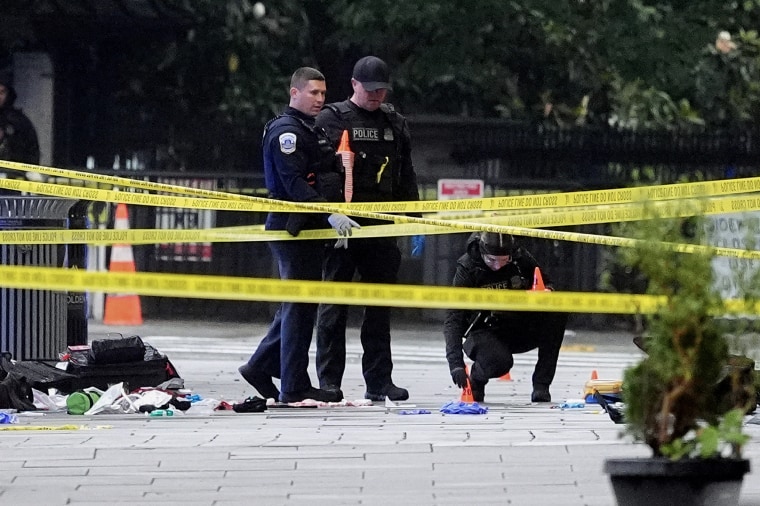
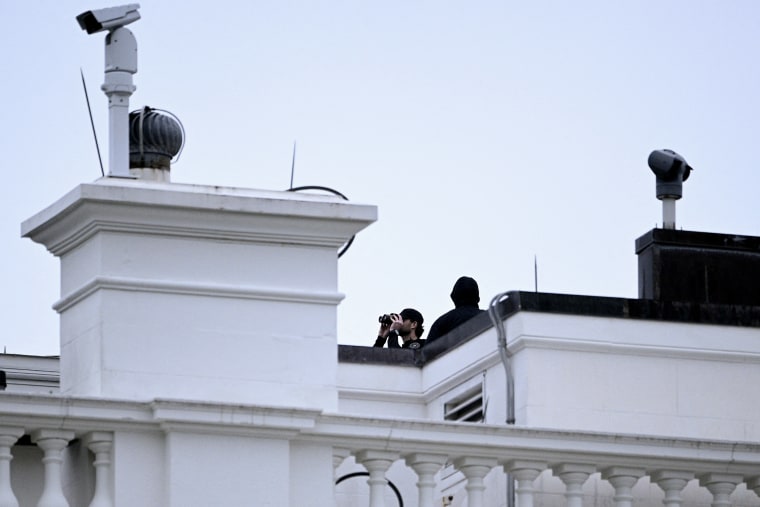
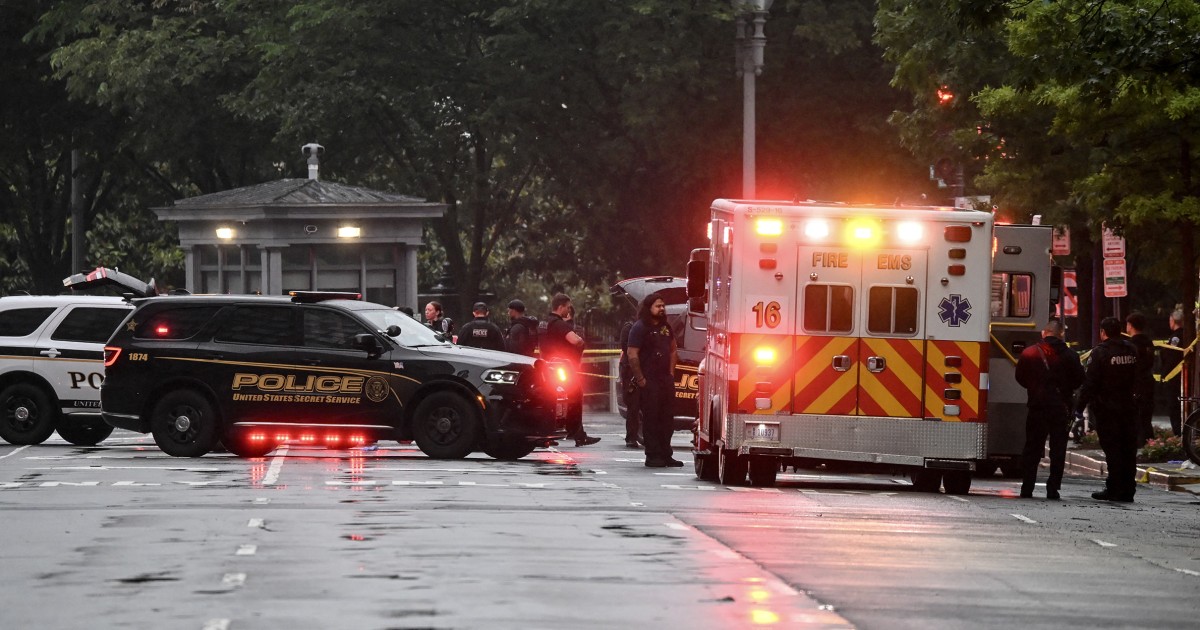
In NBC’s piece about the shooting near the White House Secret Service kills man who opened fire at White House security checkpoint we see the most concentrated expression of how the state responds to a threat: with maximum firmness, speed and reliance on force. According to the Secret Service, an armed man approached a security checkpoint at the intersection of 17th Street and Pennsylvania Avenue, took a pistol out of a bag and opened fire at officers. They returned fire, fatally wounding the assailant. The White House was immediately locked down, journalists on the North Lawn were hurried inside the briefing room, agents stood at doors with weapons at the ready; about 40 minutes later the lockdown was lifted.
What matters here is not only the event itself but the shooter’s biography, as described by NBC. Twenty‑one‑year‑old Nasir Best was already on the Secret Service’s radar: he had previously been detained for unlawfully entering a restricted area near the White House, he had claimed to be Jesus Christ and to “want to be arrested,” and in June he was involuntarily taken to a clinic after blocking vehicle access to the White House complex. Several law enforcement sources told the network he had a “history of mental health issues.” This is a key point: the combination of easy access to firearms, mental health problems and symbolic political targets (the White House) creates a formula for chronic risk that security agencies can only respond to, not fully prevent. The FBI and the Bureau of Alcohol, Tobacco, Firearms and Explosives have joined the investigation, but the motive remains unclear — and that, in itself, is even more troubling than a clear political objective would be.
At the same time, at the other end of the political spectrum and in another part of the country, a Fox News piece AOC tells New Yorkers to ‘pull up’ to Alabama during rally speech behind bulletproof glass plays out a scene in which security becomes not only a physical necessity but a symbol of divided politics. Progressive Congresswoman Alexandria Ocasio‑Cortez spoke in Montgomery (Alabama) behind bulletproof glass — often colloquially called “papal glass” by analogy with the protected “popemobile” — and urged the “North” to “pull up” to the South for political mobilization. She said the U.S. was not a “real democracy” until the Voting Rights Act of the 1960s and accused the Supreme Court under John Roberts of being “part of a long history of regression and repression in America.”
Her slogan “If you're not from these states, it's time to pull up” addressed supporters in the blue northern states, calling on them to actively intervene in the politics of the red South — Alabama, Georgia, Louisiana, Tennessee, Mississippi. But at the same moment Fox News and conservative commentators turn the question of security into a tool of political critique. Podcaster Todd Spears in a viral video mocks the idea that calling for people to “come” from behind a protective glass cocoon is hypocritical; “you’ll come here with that rhetoric — better bring a tank.” Another popular TikToker, Kay Bennett, warns AOC supporters “not to fall for provocation,” half‑jokingly listing the “dangers” of the South — from feral boars and alligators to people who “don't call the police, they call the coroner,” and who “will band together to kick you out.”
Political polarization in this episode literally materializes as the glass between the politician and the crowd. On one hand, the very need for a bulletproof barrier speaks to real risks of violence against public figures, especially polarizing ones like Ocasio‑Cortez. In an environment where mass shootings and threats to politicians have become a regular part of the news cycle, such protection is no longer an anomaly but a norm. On the other hand, that protection is instantly interpreted by opponents as a symbol of elites’ separation from the “people” and a reason to mock the “battle” call made from beneath a glass capsule. Thus security ceases to be merely a practical measure and becomes a political marker: “friends” see it as prudent caution, “others” see hypocrisy and theater.
The key concept here is political mobilization driven by fear. When AOC says the Supreme Court is part of a history of “regression and repression,” she frames political struggle as almost existential, requiring the “North” to “drive into” the “South” and save democracy. Conservative bloggers, in turn, paint the South as simultaneously dangerous and self‑sufficient, a place “outsiders” should avoid. Both discourses rely on an image of real threat — but steer it in opposite directions, reinforcing the feeling that the country lives in a “besieged fortress” mode, with different groups seeing different forces as the besiegers.
Against this backdrop, a brief item from Gulf Coast News Death investigation confirmed at East Naples Walmart about a death investigation at a Walmart in East Naples reads almost like a neutral chronicle. The Collier County Sheriff confirmed that a “death investigation” is underway at the store on Tamiami Trail East, firefighters and emergency medical services arrived at 3:11 a.m., details have not been released and updates were promised. Yet even this dry note fits into the overall anxious picture: a large 24‑hour retailer, a typical public space, a nighttime incident that instantly becomes “breaking news.” The phrase “death investigation” in American news parlance — to clarify — means police treat any death involving law enforcement or occurring in a public place as potentially criminal until circumstances are determined. It’s not necessarily a homicide or suicide, but it signals that state institutions and the media automatically switch to heightened attention for any incident involving risk to life in public space.
Viewed together as pieces of one mosaic, several key trends emerge. First, the normalization of stringent security measures and instantaneous forceful responses. In Washington, an exchange of gunfire at the White House gates and an immediate lockdown of the complex; in Montgomery, a speech behind bulletproof glass; in Florida, emergency responders descending on a Walmart at night with immediate media recording. The state and security infrastructure operate ever more automatically and centrally, and society grows accustomed to armed individuals, cordons, metal detectors and special protocols as part of daily life.
Second, the intertwining of real violence and mental health issues. The story of Nasir Best — detained and involuntarily hospitalized before coming to the White House gates with a pistol — illustrates a systemic failure between medical care, social support and gun control. At the same time, media emphasize his mental state, effectively reducing discussion of a possible political motive. This is a typical U.S. narrative: the line between a lone individual act by someone with a diagnosis and ideologically motivated violence is blurred, but institutions often opt to explain many incidents as mental health cases to avoid inflaming political passions. In the East Naples Walmart case we still lack cause or context, but the structure of the report — emergency services, an official statement about an investigation, awaiting updates — follows the logic that any death in a public place is a potential element of a broader story about violence or its threat.
Third, political polarization turns security into a weapon. AOC speaks of a “non‑democratic” America before the 1960s and blames the Supreme Court for regression; conservatives respond by ridiculing not only her historical interpretations but the very fact of heightened protection as a symbol of “elite” fear and “Northern” aggression toward the South. The phrase “pull up” — slang for “come,” often with a confrontational tone — becomes a trigger: for supporters it is mobilization, for opponents it is a threat and an occasion to speak of “provocation” and even a joke about a “civil war in the style of the 1860s,” as one Fox News commenter wryly notes. Thus political language itself becomes a factor that intensifies the sense of danger.
Finally, fourth, the media environment cements and amplifies all these trends. NBC in its piece details every aspect of the White House incident — from the estimated number of shots fired (20–30, according to their on‑scene team) to the lockdown timestamps, noting that President Donald Trump was in the White House but unharmed, that he was swiftly informed and that he thanked law enforcement on Truth Social and again called for the creation of “the most secure and protected space of its kind” — likely referring to a project to bolster security around the White House ballroom. Fox News focuses less on AOC’s speech content and more on criticizing her “anger,” “divisive” words and the “irony” of her protection — via viral TikTok videos and sarcastic commentary. Gulf Coast News, by contrast, offers a minimal, nearly police‑report style item but highlights that it is “breaking news,” inviting readers to download an app for instant alerts, turning even an unclear incident into part of a continuously updated picture of threat.
Taken together, the three stories show a society in which security has ceased to be background and become the central nerve of politics, media and everyday life. At the White House this is expressed in a deadly exchange of gunfire with a person whom the system had seen before but could not prevent from taking the final step. In Alabama it appears as bulletproof glass between a politician and the crowd and rhetoric to “pull up,” which simultaneously mobilizes and terrifies. In a nighttime Walmart outside Naples it is that even without details or context the fact of a death is automatically treated as cause for concern and immediate investigation.
The key takeaway is that America lives in a reality where physical violence, political hostility and media dramatization feed each other. Fear and security become both a real necessity and a tool in the struggle for attention and power. This creates a paradox: the more protection around institutions and politicians, the more some of society becomes convinced elites live in their own fortified world; the louder politicians talk about “repression,” “regression” and the need to “drive into” other states, the greater the chance rhetoric will spill into real threats or violence; the more closely the media track every alarming incident, the more normal the idea becomes that danger is an inevitable part of everyday life.
Understanding this closed loop is the first step toward discussing not just how to further strengthen security, but how to reduce the overall temperature: from reforms in psychiatric care and gun control to holding politicians accountable for their language and the media responsible for how they cover threats and incidents. For now, judging by NBC, Fox News and Gulf Coast News, a different approach dominates: a quick shot, an immediate lockdown, bulletproof glass, a terse “death investigation” and an unending stream of alerts — as the new normal.