What often lands in the "Breaking news" section usually looks like a set of unrelated local stories: here — a brush fire in a rural area, there — a fatal stabbing in a residential neighborhood, somewhere else — a brazen theft from a small restaurant. But when you look at those reports together, as in the notes about the fire near Cheney, Washington on krem.com, the fatal stabbing in Grand Rapids on WZZM13 and the theft at Pig Candy BBQ on WLWT, a more coherent picture emerges. All of these stories are about how fragile the sense of everyday safety can be and how local services, ordinary residents, and businesses respond to stressful, often dangerous situations. The pattern “unexpected threat — immediate reaction — attempt to return to normal” runs through all three accounts and best explains what really lies behind the dry label “breaking news.”
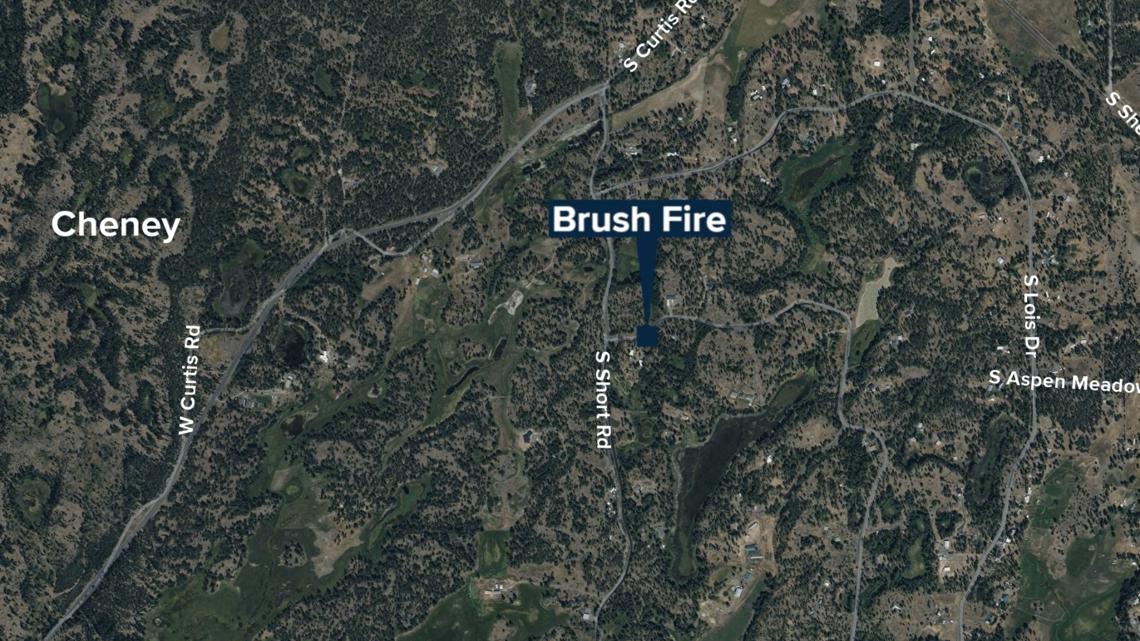
In the piece about the fire near Cheney, Washington, what matters is not only the natural hazard itself but the detailed mechanism of response. Around 2:20 p.m. local time at the area of 17800 S. Aspen Meadows Drive, a brush fire ignites in dry vegetation; at first its area is estimated at two acres, but by 6:00 p.m. it has grown to 30 acres — typical dynamics for a brush fire, which spreads quickly due to wind and dry conditions. Spokane County Fire District 3 repeatedly updates the situation: initially noting additional units were called in to fight the fire, then, as the fire grows, evacuation levels for residents are raised.
It’s useful to explain the evacuation level system mentioned by journalists at krem.com. Level 1 — “Get Ready”: people are advised to gather, prepare documents, medications, valuables, and plan an exit route, but leaving is not yet required. Level 2 — “Get Set to Leave”: this is when bags are packed, the car is fueled, and at any moment a mandatory evacuation order (Level 3 — “Go Now”) could be issued. Essentially, these are gradations of risk that help residents understand how close the situation is to critical.
In Cheney the level was elevated to Level 2 by 3:30 p.m.: several structures were threatened. Around 6:00 p.m. firefighters reported that one home had burned and two people were evacuated from it, but much of the fire perimeter was already secured with containment lines and “they are making good progress.” The term “100% lined,” appearing in the final update at 8:40 p.m., means a continuous containment line has been established around the fire’s entire edge (trenches, firebreaks, mineralized strips, or areas already burned), which should prevent further spread of the flames. That does not always mean the fire is completely extinguished, but it indicates it has been “contained” within a defined boundary and is not threatening new territory.
The key point here is demonstrating how a sense of manageability in a crisis is formed. First residents hear: “Cause of the fire is unknown, under investigation,” then about the increase in area and the rise in evacuation level, the burned home and the two evacuated people, and only at the end a calm statement: “Fire has stopped spreading, 100% lined, Level 1 evacuations remain, this is the final update.” The terse chronology shows the importance of functioning procedures, pre-established signals (evacuation levels), and coordination between the fire district and the sheriff’s office, which fields residents’ calls. The whole system aims to minimize loss of life, even if property damage cannot always be avoided.
The story from Grand Rapids on WZZM13 is of a different scale, but the logic of response is similar. Around 12:20 a.m. police responded to a stabbing at the intersection of Goodrich Avenue SW and Cesar E. Chavez Street SW. The victim — only 18 years old — was taken to a local hospital in critical condition and soon died. The report contains few further details: the case has been turned over to the Grand Rapids Police Department’s Major Case Team and the investigation is ongoing.
The very mention of the Major Case Team is significant: in U.S. policing this term denotes specialized units that handle the most serious and complex cases — homicides, attempted homicides, major violent crimes. Their involvement signals the police consider this incident a serious criminal matter requiring more than routine patrol work: a full cycle of forensic investigation, witness interviews, evidence collection, video analysis, and determining motive and connections. Unlike the wildfire story, this is not about a natural force but human aggression, yet both pieces highlight suddenness and vulnerability: a young person, an ordinary city intersection, an early Sunday morning — and a life ends in a matter of minutes.
It is telling how little is said about the identity of the deceased and the possible circumstances of the conflict. That is typical of initial reports on violent crimes: until all facts are established, police and media limit themselves to basic information — time, place, age, and the status of the investigation. For the reader, such a text underscores not so much the specifics of the case as the broader background: the risk of sudden fatal violence exists even in familiar urban spaces. As in the fire case, society’s response is institutional — here, the work of a specialized team tasked with restoring control by solving the crime and holding perpetrators accountable.
The third story on WLWT initially seems far less dramatic: a few-hundred-dollar theft from a small barbecue restaurant, Pig Candy BBQ, in the California neighborhood of Cincinnati. But it clearly shows the human dimension of “small” crises and how police and locals react to them.
44-year-old Chad Snider, whom journalists and restaurant staff jokingly dubbed the “barbecue bandit,” was caught on Pig Candy BBQ’s surveillance cameras Tuesday morning. Footage shows him adopting the role of a “man in uniform”: putting on a white shirt and a vest to create an “official” appearance, smoking a cigarette near the smoker, and telling cook Hayley Besterain that he was “with some people” or supposedly from a poisons control department or even the health department. It’s important to remember that such impersonation is a classic tactic of petty con artists and thieves: using elements of an “official” image (neat clothing, authoritative manner) to gain access to others’ property without forcible entry.
The cigarette detail undermines Snider’s story: as Besterain rightly notes, “you can’t be from any department if you’re smoking a cigarette in our restaurant.” Her reaction is also an example of everyday risk management: she avoids confrontation, senses a threat from the “unknown man,” goes inside, locks one of the doors, and calls for help. While she does that, Snider leaves, taking power tools and kitchen items worth several hundred dollars.
The subsequent course of events shows how timely surveillance footage and publicity speed up an arrest. Pig Candy BBQ’s cameras provide police with a clear image of the suspect, the story makes the news, and four days later, on Saturday, Indiana State Police arrest Snider in Dearborn County. Reporters note that a hypodermic syringe/needle was found on him — a term that usually indicates either illegal possession of drug paraphernalia or potential violations of rules for handling medical devices. The fact he is apprehended on this incident underscores how different forms of deviant behavior — drugs, petty crime, impersonation — often intertwine in the backgrounds of such individuals.
It’s interesting how the restaurant’s owners and staff interpret the incident. Co-founder Christina Goehrig says they are “not too worried about the tools” and don’t even know when they’ll get them back; more important for them is to “close the chapter of drama” and focus on the Memorial Day menu, noting that “Monday means, of course, ribs.” In that light irony you can hear an important theme: small businesses, when confronted with local emergencies, have to almost immediately switch from the role of “victim of a crime” back to “normal operations” — for the sake of customers, employees, and revenue. Cameras, social media, and a willingness to share video and stories with local media become part of their “safety toolkit” alongside locks and alarms.
If you combine all three stories — the brush fire near Cheney, the fatal stabbing in Grand Rapids, and the theft at Pig Candy BBQ — several key trends emerge. First, the growing role of local services as the primary actors in threat situations: Spokane County Fire District 3 coordinates evacuations and suppression, the Grand Rapids Police Department hands the case to a Major Case Team, and Indiana State Police apprehend a suspect who moved between counties and even states while hiding. Second, the constant presence of cameras — from street and restaurant systems to potential municipal networks — changes the logic of response: as in the Pig Candy BBQ case, visual evidence not only speeds up an arrest but also instantly becomes media content around which a public narrative forms.
Third, all texts show increasing “proceduralization” of security — the existence of clear formalized steps, whether it’s Level 1 and Level 2 evacuation stages in Cheney, deployment of a Major Case Team in Grand Rapids, or interjurisdictional cooperation among police in the arrest of Snider. These formulas and names serve both as internal codes for professionals and as signals to the public: the situation is under control and standard mechanisms have been activated.
Finally, a common thread in all three stories is people’s desire to return to everyday normalcy. Cheney residents remain at Level 1 evacuation but receive the message that “the fire has been stopped and contained” — an important psychological milestone. In Grand Rapids, despite the tragic death of an 18-year-old, city life goes on, and the involvement of a specialized team offers hope for justice. In Cincinnati, Pig Candy BBQ staff, barely shaken by the encounter with the “barbecue bandit,” are already discussing a holiday menu and joking that the whole episode was resolved surprisingly quickly: “he was here Tuesday, and by Saturday he was behind bars.”
These seemingly disparate news items help better understand the fabric of everyday security: it’s made up not only of major disasters and headline crimes but of dozens of local incidents where the scale of damage matters less than the ability of people — from firefighters and police officers to cooks and small-restaurant owners — to quickly orient themselves, act according to procedures, and, where possible, preserve human dignity, humor, and trust in those who come to help.