
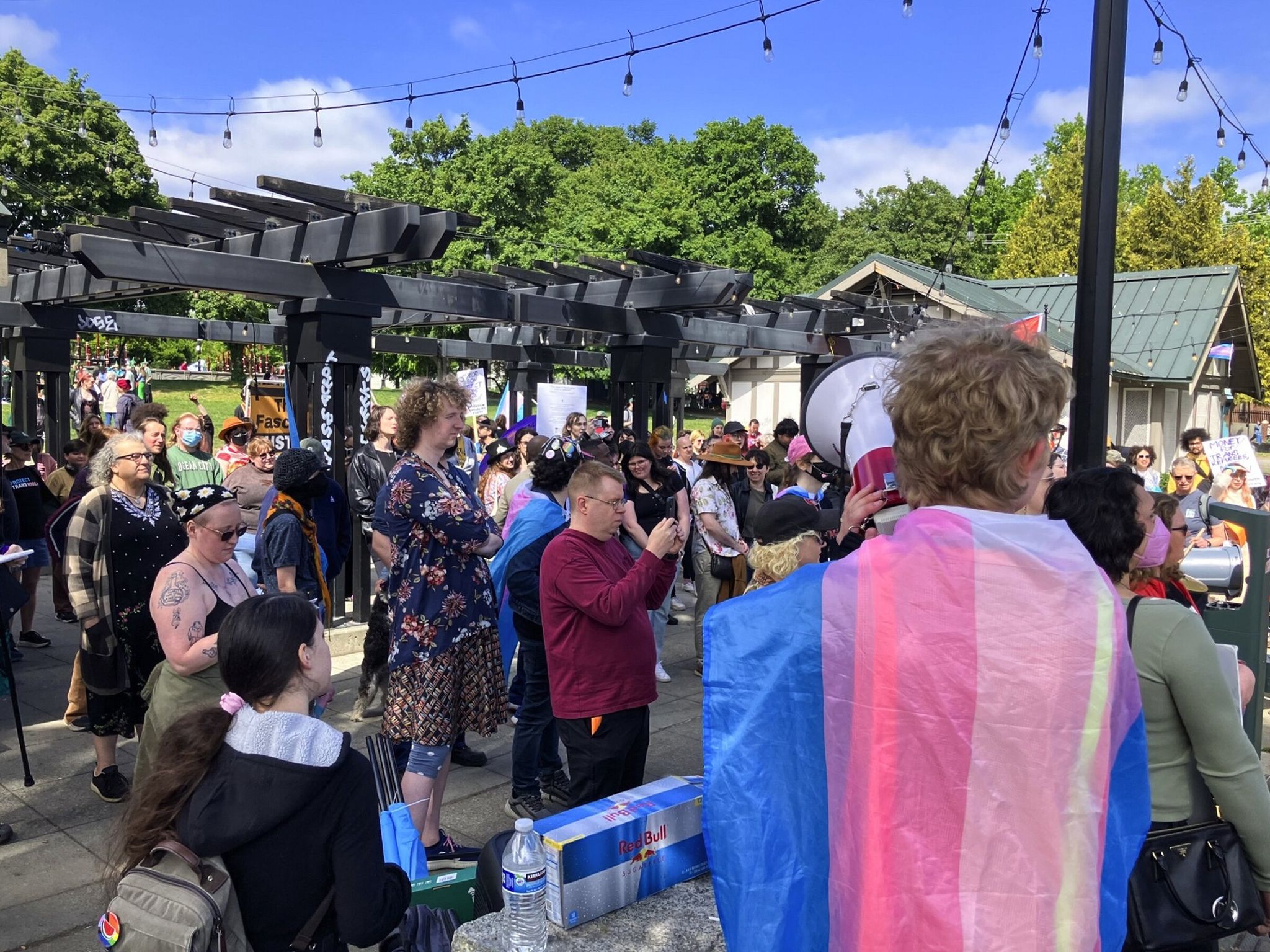
A few hundred activists gathered Saturday at Cal Anderson Park on Capitol Hill — a site with deep symbolic significance for the LGBTQ community. The park is named for Cal Anderson, the first openly gay legislator in the Washington state legislature, and sits in the heart of Seattle’s historic LGBTQ district that Capitol Hill has been since the 1960s. For decades the park has served as a venue for protests, pride events and community gatherings, underscoring the march’s connection to the movement’s roots. Participants carried signs reading "Trans rights are human rights!", waved flags and chanted demands. Those gathered ranged in age from 26-year-old Logan Hodge, holding a transgender flag, to 76-year-old Maride Bonadea, who played drums made from plastic buckets. Activists stressed that participating in the action gives them a sense of unity and support during a difficult time.
The march was organized by the Seattle Trans and Intersex Mutual Aid Network in partnership with the Movement for Gender Equity. The "Mutual Aid Network" is a grassroots organization operating on a mutual aid model: it directly connects transgender and intersex people in need of resources (housing, legal help, medical care) with community members ready to provide them. Unlike traditional nonprofits, the network emphasizes solidarity, decentralized decision-making and the absence of bureaucratic barriers. The action was prompted by a letter from the city’s LGBTQ Commission to Mayor Katy Wilson last week. The commission urged declaring a civic state of emergency to assist transgender people forced to leave their home states with conservative laws, such as Texas, Tennessee and Idaho. According to the commission, Seattle is already feeling an influx of people fleeing hostile laws and discrimination. The Mutual Aid Network is actively involved in supporting such people: the organization provides emergency financial assistance for relocation, seeks temporary housing with host families in Seattle, offers information on local social services, helps with employment and with updating documents to reflect gender identity in Washington state systems. Special attention is given to transgender people fleeing states with repressive laws, for example bans on gender-affirming care for minors.
In a response letter, Mayor Wilson agreed that a coordinated approach is necessary but declined to declare a state of emergency. Instead, she promised to create a working group this summer to assess needs around housing, mental health care, food, transportation, legal counsel and violence prevention. Activists, for their part, say those measures are insufficient and are demanding immediate funding for community organizations.
Although the march was not directly linked to the May 10 killing of University of Washington transgender student Juniper Blessing, that tragic event heightened anxiety within the community. Police have not yet found evidence that the student was killed specifically because of her transgender identity, but many marchers said they fear for their safety. "I’m here to show how many of us there are, and that we’re scared and angry," said 23-year-old trans woman Mossie, who declined to give her last name.
Based on: Trans rights supporters rally in Seattle, march on City Hall